Featured OEM & Wholesale Contact Lenses Portfolio
Explore high-volume factory-direct products optimized for worldwide retail and online distribution. Manufactured in CFDA (NMPA) certified Class 100,000 cleanrooms using state-of-the-art automated cast molding technology.
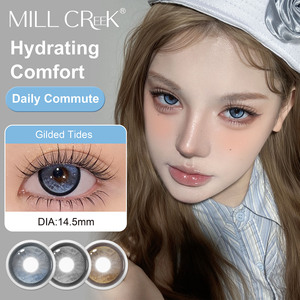
Haipurecon Factory Direct Wholesale Sky Blue Color Contact Lenses Natural Multi Colors
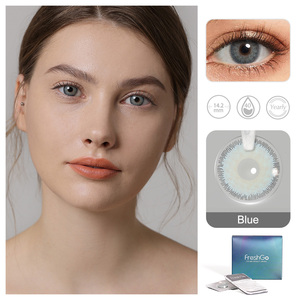
Freshgo Wholesale Prescription Lenses Yearly Coloured Contact Lenses Natural Power Lens
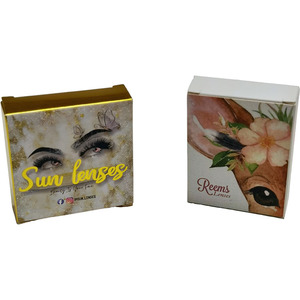
Custom Logo Colored Contact Lens Paper Box Luxury Gold Foil Cosmetic Packaging
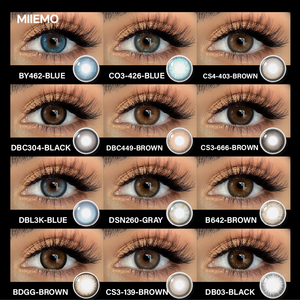
Miiemo Big Eye Grey Colored Contact Lenses 14.2mm Soft Natural Enlarging Eye Lenses
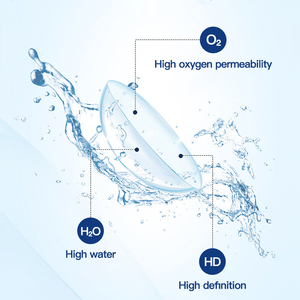
Magister Clear Soft Prescription OEM Transparent Contact Lens With Power for Myopia
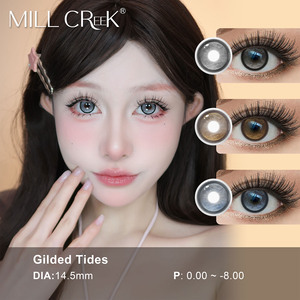
Haipurecon Factory Direct Wholesale Color Contact Lenses Natural Multi Colors Bulk Order
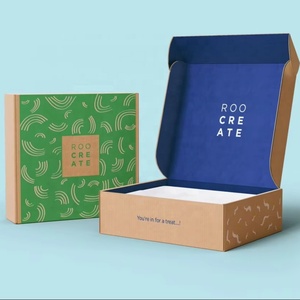
Kraft & Green Corrugated Shipping Boxes Custom Logo Packaging for Gift Subscription Sets
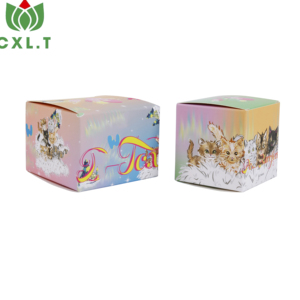
Wholesale Natural Colored Contact Lenses Packaging Box Card Stock Window UV Printing
Global B2B Market Analysis: Sourcing Colored Soft Lenses from China
The international landscape for cosmetic ocular devices and corrective soft contact lenses is experiencing a profound paradigm shift. Valued at over USD 3.8 Billion in 2023, the global colored contact lens market is projected to grow at a Compound Annual Growth Rate (CAGR) exceeding 8.4% through 2030. This acceleration is predominantly propelled by the fusion of aesthetic fashion trends, expanding medical myopia correction needs, and rapid product innovation in high-oxygen bio-compatible materials.
China has established itself as the world’s leading hub for contact lens manufacturing and OEM contract engineering. Modern Chinese optical factories have moved far beyond labor-intensive manufacturing, investing heavily in fully integrated R&D, robotic mold fabrication, bio-encapsulation pigment printing, and optical coherence tomography (OCT) automated quality assurance systems. Global brand owners, healthcare distributors, e-commerce retailers, and pharmacy chains now rely on top Chinese manufacturers to secure high-margin, scalable production capacity while complying with rigorous international regulatory mandates.
Product Development Trends & Polymer Technology Innovations
To maintain a competitive edge in semantic search intent and provide actionable information gain for technical optical procurement buyers, it is essential to analyze the critical material and technological advancements defining contemporary soft contact lens manufacturing.
Micro-Encapsulation "Sandwich" Tech
Modern color printing utilizes triple-layer bio-encapsulation. Non-ionic pigment matrices are locked cleanly between two micro-thin layers of hydrogel material (polyHEMA), guaranteeing zero direct color contact with corneal tissues while sustaining ultra-vibrant 3-tone color iris matching.
Silicone Hydrogel (SiHy) Chemistry
Transitioning from conventional 38% water polyHEMA to high oxygen transmissibility (Dk/t > 80-120) Fluorosilicone Hydrogel formulations. This prevents corneal hypoxia, dramatically improves all-day wearing comfort, and enables prolonged daily wear modalities.
Aspheric Edge & Optical Geometry
Advanced computer-controlled cast molding shapes lens edges into smooth multi-radius bevels. This precision geometry optimizes tear exchange under the lens, reduces lid friction during blinking, and eliminates spherical aberration for high-definition visual clarity.
Technical Parameter Matrix: Hydrogel vs. Silicone Hydrogel OEM Specifications
For optical brand managers and procurement specialists evaluating private-label production runs, the following table details the technical performance benchmarks achieved by modern Chinese manufacturing lines:
| Technical Parameter | Standard Hydrogel (polyHEMA) | Next-Gen Silicone Hydrogel (SiHy) | OEM Private Label Flexibility |
|---|---|---|---|
| Oxygen Transmissibility (Dk/t) | 18 - 28 Dk/t | 85 - 130 Dk/t | Customizable raw material blends |
| Water Content (%) | 38% - 58% | 42% - 55% (High Wettability) | Tailored to climate & tear-film profiles |
| Base Curve (BC) Range | 8.5mm - 8.6mm | 8.4mm - 8.7mm | Precision micro-molds available |
| Diameter (DIA) Options | 14.0mm - 14.5mm | 14.0mm - 14.8mm | Natural (14.0) to Enlarging (14.5+) |
| Color Printing Technology | 2-Tone / 3-Tone Micro-Dot | 3-Layer Sandwich Encapsulated | Custom Pantone / Iris Design Artwork |
| Power Range (Diopters) | 0.00 to -10.00D | 0.00 to -12.00D (Toric Available) | Cosmetic plano & Rx corrective powers |
| Sterilization Standard | Steam Autoclave 121°C | High-Temp Automated Autoclaving | 100% Bio-Burden Inspection Assured |
Future Sourcing & Procurement Trends for Wholesale Buyers
As consumer preferences mature, global retail buyers and brand developers must align their procurement strategies with four key macro trends reshaping the soft contact lens industry:
1. Rapid Shift Toward Daily Disposable Modalities: While yearly and monthly reusable lenses maintain a strong foothold in fashion cosplay and budget retail segments, premium retail channels are seeing massive growth in Daily Disposable (1-Day) colored contact lenses. Daily disposables offer unmatched hygiene, eliminate lens care maintenance for end-users, and generate higher recurring lifetime revenue for brand owners. Sourcing partners in China are expanding automated high-speed blister packaging lines specifically engineered for low-cost 1-Day volume runs.
2. Agile Private Labeling & Micro-MOQ Manufacturing: Traditional optical manufacturing required upfront orders of 50,000+ pieces per SKU, creating severe cash flow barriers for independent boutique brands. Leading Chinese factories now offer flexible OEM/ODM programs with modular tooling, allowing brands to launch bespoke color collections with lower initial minimums while retaining rapid turnarounds on custom packaging box printing.
3. Integrated Functional Coatings (UV & Blue Light Filtering): Cosmetic color is no longer evaluated in isolation. Global consumers demand multi-functional ocular protection. Advanced factory lines seamlessly incorporate Class II UV-blocking agents (absorbing >85% UVA and >95% UVB radiation) directly into the hydrogel matrix without compromising color saturation or lens clarity.
4. Sustainable Packaging & Eco-Blisters: Sustainable supply chain compliance is becoming mandatory across European and North American markets. Forward-thinking manufacturers are replacing non-recyclable foil blister lids and heavy plastics with bio-degradable polymer blisters, reduced-paper gold foil box packaging, and FSC-certified secondary cartons.
Enterprise Strengths & Advanced Factory Manufacturing Capabilities
When evaluating supply chain partners in China, optical procurement executives require proof of comprehensive manufacturing control, regulatory certification, and scalable throughput. Operating as an industry benchmark, integrated facilities like Mylensora Technology Co., Ltd. represent the highest tier of direct factory infrastructure:
End-to-End In-House Integration
From initial iris artwork design, optical formulation, and high-precision mold fabrication to automated casting, color printing, primary blister sealing, and secondary box packaging—every operational step is contained strictly in-house, eliminating middleman markups and preserving absolute IP confidentiality.
NMPA / CFDA & ISO Certification
Operating under strict ISO 13485 Medical Device Quality Management systems, production processes meet full CFDA (now NMPA) Class III medical device clearance. Quality assurance protocol mandates 100% Automated Optical Inspection (AOI) to verify zero surface micro-defects or edge irregularities.
Massive Scalable Capacity
Phase I facility operations deliver over 120 million lenses annually across 8 automated cast-molding lines. With Phase II industrial expansion underway to build Asia's largest contact lens production base, wholesale distributors are guaranteed uninterrupted supply during peak retail surges.
Furthermore, international trade authority is continuously validated through active participation at world-renowned optical exhibitions, including MIDO Milan, the HKTDC Hong Kong International Optical Fair, and Dubai Vision Plus Expo. This global presence ensures factory design teams remain at the cutting edge of international cosmetics fashion trends and regulatory mandates.
Frequently Asked Questions (FAQ) for B2B Sourcing & Procurement
Below are detailed technical answers addressing the primary operational, legal, and logistical questions raised by B2B optical buyers, import managers, and private label brand owners.
1. Is sourcing from a direct China contact lens factory compliant with international medical device regulations? +
2. What is the standard OEM / ODM private label workflow for launching a custom color collection? +
3. How does the Micro-Encapsulation "Sandwich" printing method protect wearer safety? +
4. What are the realistic Minimum Order Quantities (MOQs) for wholesale vs. fully customized OEM packaging? +
5. Can prescription power myopia correction be combined with cosmetic color designs? +
6. What is the average shelf life and expiration standard for sealed soft contact lens blisters? +
Accelerate Your Contact Lens Brand with Direct Factory Supply
Partner with China's leading OEM/ODM soft contact lens manufacturer. Access direct factory pricing, low MOQs, custom packaging solutions, and full medical-grade regulatory support.