Export-Ready OEM & Wholesale Contact Lenses
Certified hydrogel, silicone hydrogel, and specialized optical lenses engineered for global compliance.
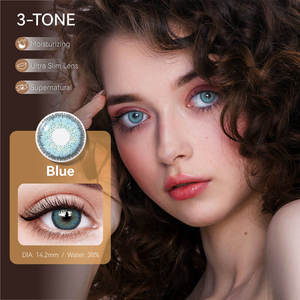
DSC Trendy Colored Contact Lenses Wholesale Eye Enlarging Soft Natural Blue Colored Contact Lenses for Ladies Glamorous Look
View Product Specifications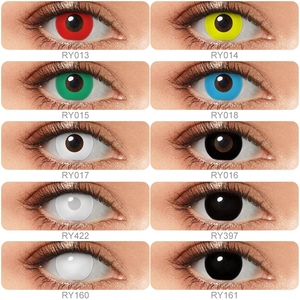
Free Shipping Pseyeche Halloween Contacts Crazy Sharingan Eye Lens Anime Cosplay Contact Lenses Eye Lens Lentes De Contacto
View Product Specifications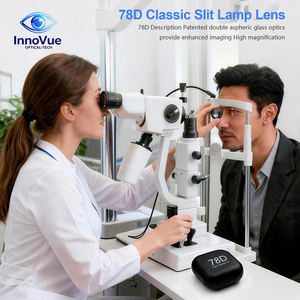
Factory Direct InnoVue 78D Contact Aspheric Ophthalmic Lens CE ISO Certified with OEM Service & 1 Year Warranty for Eye Centers
View Product Specifications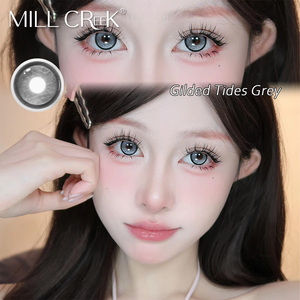
Haipurecon Factory Direct Wholesale Grey Sky Blue Color Contact Lenses Natural Multi Colors New Style Bulk Order Low MOQ
View Product Specifications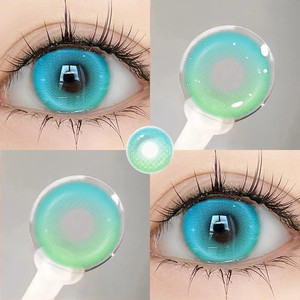
Cosplay Contact Lenses Colored Circle Lens Soft Korean Style Crazy Color Eye Contacts for Anime Party Costume Lentes De Contacto
View Product Specifications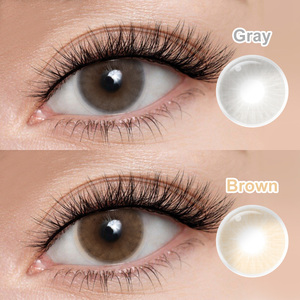
Freshgo Natural Yearly Soft Contact Lenses Customized OEM Wholesale Colored Contact Lenses Lentes De Contacto De Color
View Product Specifications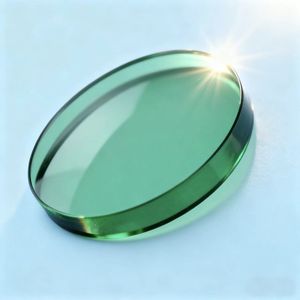
Colorful Semi-Finished Photochromic Lenses Green 1.56 Optical SF Lens Contact SF Lenses
View Product Specifications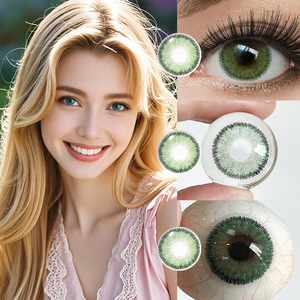
Contact Lenses Wholesale OEM ODM 14.5mm 40% Water Content Colored Contact Lenses Soft Hardness HEMA Subtle Enhancement
View Product SpecificationsAuditing Contact Lens Manufacturers for the Pakistani Market: A Quality & Compliance Blueprint
Navigating Supplier Evaluation, Technical Audits, Regulatory Verification, and Local Market Optimization
The Pakistani vision care and cosmetic optical sector is experiencing an unprecedented surge in demand. Spurred by rapidly evolving fashion trends in major urban centers like Karachi, Lahore, Rawalpindi, and Islamabad, alongside a expanding clinical need for vision correction (myopia management), importing contact lenses has become a highly lucrative venture for optical distributors, pharmaceutical chains, and private-label brand owners. However, because contact lenses are categorized as Class B medical devices under international frameworks and governed strictly by the Drug Regulatory Authority of Pakistan (DRAP) under the Medical Devices Rules 2017, selecting an unverified supplier presents enormous regulatory, financial, and reputational risks.
Executing a comprehensive, technical contact lens factory audit is the ultimate mechanism for mitigating supply chain vulnerability. This definitive whitepaper provides B2B buyers, procurement executives, and regulatory compliance officers in Pakistan with a structured, rigorous audit checklist. It outlines critical evaluation parameters covering cleanroom environmental controls, polymer chemistry integrity, sandwich printing technologies, bio-burden controls, and packaging verification necessary to guarantee compliance with DRAP registration guidelines and maximize brand profitability.
Pillar I: Cleanroom Environment & ISO 13485 Quality Management Architecture
Contact lenses come into direct contact with the sensitive human cornea. Consequently, manufacturing facilities must operate under stringent environmental controls to prevent particulate contamination, microbial ingress, and chemical residues. When auditing an OEM exporter's manufacturing facility, auditors must scrutinize the physical plant infrastructure against ISO 14644 cleanroom standards and ISO 13485 quality systems.
Cleanroom Classification
Verify that primary polymerization, cast-moulding, hydration, and primary blister-sealing areas operate within ISO Class 7 (Class 10,000) or ISO Class 8 (Class 100,000) environments with positive pressure gradients.
Purified Water Systems (PW/WFI)
Inspect the USP/EP grade water purification plant. Contact lens hydration requires continuous loop water systems with UV sterilization and endotoxin filtration (< 0.25 EU/mL).
Environmental Monitoring
Audit batch records for air velocity, airborne particulate counts, settle plates, and surface swab tests conducted daily across critical processing zones.
Key Takeaway for Pakistani Buyers
Facilities lacking automated particulate monitoring or employing manual hydration systems carry a high risk of bacterial keratitis outbreak among consumers—leading to immediate DRAP import bans and total brand forfeiture. Ensure your audit checklist strictly verifies continuous automated monitoring logbooks.
Pillar II: Detailed Contact Lens Factory Audit Checklist
The following technical matrix represents the core operational protocol required when performing on-site or third-party (e.g., SGS, Intertek, TÜV SÜD) audits of Chinese contact lens exporters supplying the Pakistan market:
| Audit Category | Evaluation Parameter | Standard Criteria & Tolerance | Verification Method |
|---|---|---|---|
| Raw Material Integrity | HEMA / NVP / Silicone Monomer Purity | Monomer purity ≥ 99.5%; Heavy metals < 10ppm; Bisphenol-A (BPA) Free. | Gas Chromatography-Mass Spectrometry (GC-MS) Certificates of Analysis (CoA) per batch. |
| Color Pigment Safety | Color Layer Immobilization | "Sandwich" / Bio-compatible color technology; Pigments fully encapsulated inside lens matrix. | Rubbing test with solvent (Isopropanol); Cross-section electron microscopy inspection. |
| Optoelectronic Moulding | Base Curve (BC) & Diameter (DIA) Precision | BC tolerance: ±0.20 mm; DIA tolerance: ±0.20 mm; Center Thickness: ±0.005 mm. | Automated non-contact optical projection & laser interferometry measurement. |
| Sterilization Process | Moist Heat Autoclave Validation | Terminally sterilized at 121°C (250°F) for ≥ 20 mins; Sterility Assurance Level (SAL) 10-6. | Biological indicator (Geobacillus stearothermophilus) challenge test verification. |
| Blister Sealing Integrity | Peel Strength & Leakage | Foil-to-blister heat seal force: 5.0N to 12.0N; Zero fluid leakage under high vacuum testing. | Methylene blue dye penetration testing & tensile peel tester. |
| Traceability & Document | Batch Record & DRAP Dossier | Full material-to-shipment lot traceability; Free Sale Certificate (FSC); ISO 13485 certificate. | Audit sample reconciliation; validation of Technical Master File (TMF). |
Pillar III: Polymer Chemistry & Color Printing Technology (Sandwich Method)
In Pakistan, cosmetic colored contact lenses represent over 65% of the total imported contact lens market value. However, cheap cosmetic lenses manufactured using rudimentary surface-printing techniques pose severe ocular hazards. During a factory audit, buyers must strictly evaluate the manufacturer's color encapsulation technology.
1. Surface Printing vs. Embedded Micro-Encapsulation (Sandwich Technology)
Inferior factories apply color pigments directly onto the back or front surface of the lens. Direct pigment contact with the corneal epithelium causes mechanical abrasion, allergic reactions, pigment leaching, and potential permanent vision loss. Mylensora Technology utilizes an advanced Micro-Color Sandwich Technology, wherein FDA-approved biocompatible iron oxide and titanium dioxide pigments are printed onto an inner mold layer, then completely encapsulated between two layers of clear hydrogel material (Poly-HEMA). This guarantees that pigments never come into contact with human ocular tissue.
2. Water Content vs. Oxygen Permeability (Dk/t Value) in Harsh Climates
Pakistan experiences severe environmental conditions, including high ambient temperatures, low humidity in arid zones, and high dust concentrations (PM2.5/PM10) in metropolitan centers like Lahore and Karachi. Lenses imported into Pakistan must strike a delicate balance between water content and oxygen transmissibility:
- Standard Hydrogel Lenses (38% to 42% Water Content): Highly stable in dry environments, reducing water evaporation from the lens surface and maintaining ocular hydration throughout long wearing hours. Ideal for daily or monthly wear in dusty urban settings.
- Silicone Hydrogel Lenses (High Dk/t ≥ 80): Combining high oxygen permeability with soft comfort. Essential for prescription myopia wearers who keep lenses in for 12+ hours daily. Ensures the cornea receives ample oxygen, preventing corneal neovascularization.
Audit Checklist Directive: Pigment Leaching Test
Instruct your auditor to conduct a rapid field test: Immerse a sample color lens in a 70% isopropyl alcohol solution and rub gently with a sterile cotton swab for 30 seconds. If pigment bleeds onto the swab, reject the factory immediately.
Pillar IV: Localized Application Scenarios & Aesthetic Trends in Pakistan
Successfully distributing imported contact lenses in Pakistan requires matching technical product specifications with regional lifestyle preferences, climate demands, and cultural aesthetics. A certified manufacturer must offer versatile OEM customisation options to serve distinct consumer segments.
Bridal & Festive Collections
Wedding seasons (Shadi season from October to March) drive massive volume. High demand exists for 14.2mm–14.5mm diameter enlarging circle lenses in hazel, honey, warm brown, and luminous green shades that complement heavy traditional attire and professional bridal makeup.
Natural Everyday Enhancement
Working women and university students prefer subtle, limbal-ring-enhanced lenses (e.g., natural grey, muted blue, olive brown) available in both plano (0.00) and power prescriptions (-0.50 to -10.00D).
Cosplay & Special Effects
Growing youth subcultures, anime conventions, and theatrical productions in Lahore and Karachi drive niche demand for crazy color, anime, and Halloween lenses (Sharingan, blackout, vampire white) requiring quick domestic stock availability.
Pillar V: DRAP Compliance & Import Regulatory Roadmap for Pakistan
Under the Medical Devices Rules 2017 enforced by the Drug Regulatory Authority of Pakistan (DRAP), contact lenses fall under Class B (Low-Moderate Risk) or Class C (Moderate-High Risk) depending on corrective power and replacement duration. Importing uncertified medical devices leads to immediate seizure at ports (Karachi Port / Port Qasim) and legal penalties.
Essential Documentation Required from the OEM Factory:
- ISO 13485 Certificate: Issued by an accredited Notified Body covering design, development, and manufacturing of soft contact lenses.
- Certificate of Free Sale (CFS / FSC): Issued by the National Medical Products Administration (NMPA) or competent health authority of the country of origin, establishing that the lenses are freely sold in the domestic market.
- Declaration of Conformity (DoC): Formal document signed by the factory's Responsible Person certifying compliance with applicable medical standards.
- Technical Master File (TMF): Including biocompatibility test reports (ISO 10993 for cytotoxicity, sensitization, ocular irritation), shelf-life stability data, and mechanical testing results.
- DRAP Form 6 & Form 7 Application Assistance: The manufacturer must provide legalized factory documents attested by the Pakistan Embassy in the exporting country to support local registration by the Pakistani importer.
Pillar VI: Why Choose Mylensora Technology as Your Manufacturing Partner
Mylensora Technology Co., Ltd. is a premier Chinese contact lens manufacturer integrating design, R&D, automated production, sales, and global regulatory support under one roof. Designed specifically for wholesale distributors, healthcare chains, and private label optical brands across Pakistan and the Middle East, our enterprise infrastructure guarantees uncompromised quality and scale.
- Massive Production Capacity: Completed Phase I manufacturing base outputs over 120 million lenses annually, with Phase II expansion underway to establish one of Asia's largest contact lens production hubs. This scale protects our Pakistani partners against stockouts during peak shopping seasons.
- Fully Automated Cast-Moulding Lines: High-precision computerized injection moulding eliminates human error, guaranteeing sub-micron accuracy in center thickness, base curve contouring, and edge-profile smoothing.
- Zero-Distortion Optical Quality: High-definition aspheric design reduces spherical aberrations, offering crisp, clear vision even in low-light environments.
- Comprehensive OEM / ODM Customisation: Flexible minimum order quantities (Low MOQs) for emerging brands, paired with full custom blister foil design, localized Urdu/English packaging, retail display boxes, and customized lens cases.
- Turnkey DRAP Regulatory Dossiers: We provide full document legalization, ISO 13485 certification, and complete technical documentation packages required for smooth customs clearance through Pakistani ports.
FAQ: Sourcing & Importing Contact Lenses to Pakistan
Is Mylensora a direct contact lens factory or a trading agent?
What documents are provided to assist with DRAP registration in Pakistan?
How does your factory ensure color pigment safety on cosmetic lenses?
What is the Minimum Order Quantity (MOQ) for custom OEM private label orders?
Can you supply corrective prescription power in colored contact lenses?
How are shipments handled to withstand heat during transit to Pakistan?
What replacement durations are available for bulk export?
Initiate Your Factory Audit & Sourcing Consultation Today
Partner with an accredited manufacturer providing premium quality, verified DRAP compliance, and direct factory pricing for the Pakistani optical market.