Featured OEM/ODM Colored Contact Lens Series
High-precision contact lenses engineered for cosmetic appeal, optical clarity, and regulatory compliance across global markets, including Osaka and the wider Japanese archipelago.
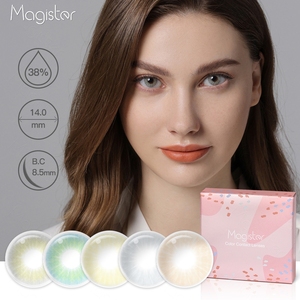
Magister Queen Most Natural Color Contact Lenses Cosmetic Colored Contacts Eye Colored Contact Lens Pupilentes
View Product Details
Wholesale Lentes De Contacto Colores Naturales Color
View Product Details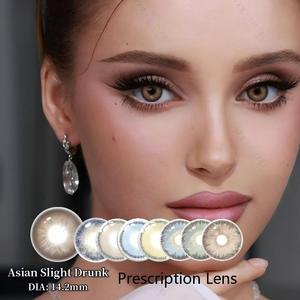
Colored Contact Lenses 14.0mm Soft Hydrogel Prescription Natural Brown Hazel Eye Lenses Wholesale Custom Logo for Daily Wear
View Product Details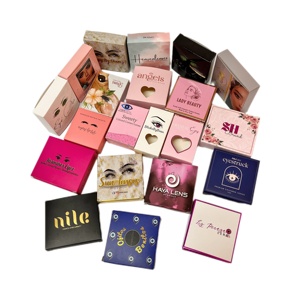
High Quality Wholesale Natural Color Eye Lens Packaging Box New Design Hot Sale Eye Contact Lenses Color Contact Lens Box
View Product Details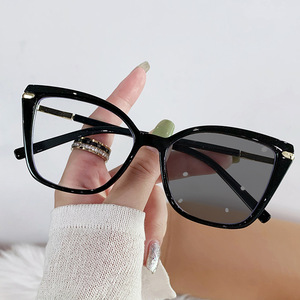
Photochromic Lenses Oversize Black Pink Metal Pc Square Lunette Photogray Anti Reflet Femme Ladies Women 2026 Cat Eye Glasses
View Product Details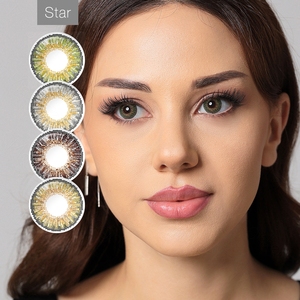
Hot Magister 3 Tone Contact Lenses Eye Contacts Wholesale Colored Contact Lenses Eye Color Lentes De Contacto De Color
View Product Details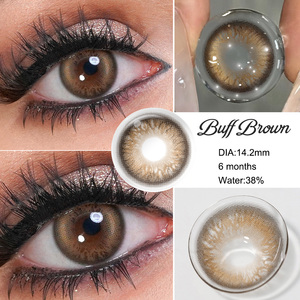
Free Sample MAGISTER Contact Lenses Prescription Colored Contacts Myopia Contact Lenses Lentilles De Lunettes with Power
View Product Details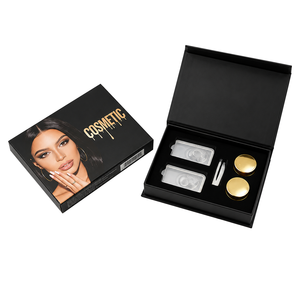
Custom Colored Contact Lens Box with EVA Insert Cosmetic Packaging Box Contacts Lenses Box
View Product DetailsEngineering Principles for OEM Colored Contact Lenses Serving Osaka
An authoritative breakdown of contact lens polymer chemistry, micro-pigment printing, and biocompatibility protocols required for international export and the Japanese market.
As the cosmetic optical sector expands rapidly across East Asia, procurement executives in major commercial hubs such as Osaka demand rigorous engineering transparency from contact lens factories. Serving Osaka's sophisticated retail, optical, and e-commerce distribution networks requires direct manufacturers to exceed standard cosmetic metrics. Mylensora Technology Co.,Ltd operates at the intersection of ophthalmic science and high-volume automated fabrication, supplying OEM, ODM, and private-label partners with medical-grade cosmetic contact lenses.
The manufacturing architecture of cosmetic contact lenses relies heavily on micro-encapsulation color technology (Sandwich Technology). Unlike lower-grade visual lenses where dyes are printed directly onto the external polymer surface—risking mechanical ocular irritation and pigment leaching—our production lines embed non-toxic, bio-compatible visual pigments securely between two micro-thin layers of hydrogel material (typically 2-HEMA copolymer matrices or advanced Silicone Hydrogel formulations).
| Technical Parameter | Standard Hydrogel (2-HEMA) | Advanced Silicone Hydrogel | Relevance to Osaka Retail Market |
|---|---|---|---|
| Water Content (%) | 38% - 58% | 33% - 45% | Higher hydration balances initial comfort for urban commuters in Osaka. |
| Oxygen Transmissibility (Dk/t) | 15 - 25 Dk/t | 80 - 130 Dk/t | High Dk/t satisfies PMDA expectations for long extended wear. |
| Base Curve (BC mm) | 8.5mm - 8.6mm | 8.5mm - 8.7mm | Optimized fit tailored to East Asian corneal curvature demographics. |
| Graphic Diameter (G.DIA) | 13.0mm - 13.8mm | 12.8mm - 13.6mm | Exact alignment with Osaka fashion preferences (natural vs enlargement). |
| Pigment Isolation Tech | Dual-layer sandwich cast | Direct-matrix embedding | Prevents pigment contact with the palpebral conjunctiva or cornea. |
For brands distributing throughout the Kansai region, maintaining strict dimensional tolerances is paramount. Corneal health relies on consistent edge profiling and smooth tear-exchange movement across the ocular surface. Our automated cast-molding machines utilize high-precision optical molds with dimensional tolerances maintained under ±0.02mm for diameter and base curve, preventing edge-lift, lens dehydration, and epithelial strain during prolonged wear.
Localized Application Scenarios Across Osaka & Kansai Retail
Understanding regional consumer demographics, visual aesthetics, and retail touchpoints across Osaka’s primary commercial districts.
Shinsaibashi & Umeda Commercial Boutiques
Everyday Cosmetic & Natural Iris Enhancement: Target consumers in high-end shopping avenues favor subtle, natural tone modifications. Daily disposable lenses with Graphic Diameters (G.DIA) of 13.2mm to 13.5mm feature soft limbal ring gradients in Hazel, Olive Brown, and Ash Grey.
Factories serving this sector must deliver superior hydration retention (high water content + Hyaluronic Acid tear-retention wetting agents) suitable for dry indoor retail and office environments.
Nipponbashi (Den Den Town) Subculture & Cosplay
Vivid Coloration & High-Opacity Thematic Visuals: Osaka's bustling pop-culture hub demands high-density, opaque color saturation capable of completely covering dark Asian irises for events, cosplay, and theatrical performance.
Our factory's multi-tone dot matrix printing ensures bright red, vibrant violet, electric cyan, and character-accurate anime patterns retain visual pop under intense studio camera lighting without obscuring the central optical zone.
Kansai Optical Store Chains & Eye Clinics
Prescription Myopia Cosmetic Integration: Optical chains across Osaka increasingly bundle vision correction with cosmetic styling. Lenses must offer precise diopter powers from -0.50D to -10.00D with ultra-thin center thickness (0.06mm to 0.08mm).
Factories must provide comprehensive quality batch control documents, sterile packaging integrity, and ISO 13485 traceable verification for healthcare compliance.
Key Market Trends & Regulatory Considerations for Importing into Osaka
Strategic guidance for brands navigating the Pharmaceutical and Medical Devices Act (PMD Act) and shifting consumer expectations in Japan.
1. The Shift Toward Silicone Hydrogel (SiHy)
While traditional 2-HEMA hydrogel remains popular for cost-effective daily disposables, Osaka's mature beauty and optical markets are shifting toward Silicone Hydrogel. SiHy materials combine hydrophilic monomer chains with siloxane networks, providing oxygen permeability (Dk/t values exceeding 80) that dramatically reduces corneal hypoxia during long wearing shifts. Our factory's automated polymer polymerization lines enable smooth transition to private-label SiHy cosmetic ranges.
2. "Nudy" Natural Iris Micro-Patterns
Heavy black outer limbal rings have given way to seamless, dot-matrix radial gradients. Modern consumers in Kansai demand "Chuchu-style" transparent color blending that interacts with the user's natural brown eye tone. Advanced 3-tone and 4-tone printing plates created in our factory R&D lab allow subtle light reflection and dimensional depth.
3. Japanese PMD Act Regulatory Landscape
In Japan, cosmetic colored contact lenses are classified as Class II Special Controlled Medical Devices regulated by the Pharmaceuticals and Medical Devices Agency (PMDA). Foreign manufacturers supplying Osaka distributors must maintain continuous compliance:
- Foreign Manufacturer Accreditation (FMA): Registration of overseas cleanroom manufacturing facilities with Japanese health authorities.
- Marketing Authorization Holder (MAH) Partnering: Collaborating with a licensed Japanese MAH in Osaka or Tokyo to manage product registration dossiers.
- JIS T 7333 Standards Compliance: Rigorous testing for physical stability, extractable chemical residues, surface roughness, and UV blocking (UV-A and UV-B attenuation).
Why Direct Supply Chain Sourcing Matters for Overseas Buyers
Mylensora Technology Co.,Ltd integrates design, R&D, mass production, sales, and export logistics under a unified management system.
Operating a scalable contact lens brand requires a direct factory partner capable of absorbing volume spikes without compromising parameters or delivery lead times. Mylensora’s state-of-the-art production base has completed Phase I with an annual capacity of 120 million lenses, with Phase II expansion underway to establish one of Asia's largest contact lens manufacturing hubs.
Factory Expansion & Certification Roadmap

Core B2B Supplier Advantages
- Direct Factory Pricing: Eliminate intermediary commission layers for optimized margin distribution.
- Full OEM/ODM Flexibility: Custom visual tint creation, private label packaging, and bespoke base curves.
- Automated QC Inspection: High-resolution camera vision systems inspect 100% of lenses for edge tears and color defects.
- Rapid Logistics to Osaka: Streamlined air freight via Kansai International Airport (KIX) and direct sea shipping via Osaka Port (Nanko).
Logistics, Freight Routes & Customs Protocol for Shipping to Osaka
Clear operational guidelines to ensure seamless transport from our cleanroom warehouses to Kansai distribution hubs.
Air Express via Kansai International Airport (KIX)
For high-turnover daily disposable SKUs, rapid sampling, or urgent seasonal restocks (e.g., pre-Halloween or holiday retail spikes in Shinsaibashi), air express cargo provides transit times of 2 to 4 business days.
Lenses are packaged in temperature-stable insulated master cartons to protect sterile blister seal integrity against high-altitude ambient pressure variations.
Ocean Cargo via Osaka Port (Nanko Container Terminal)
For large-scale wholesale re-orders and private-label inventory builds, ocean container shipments (FCL/LCL) route directly to Osaka Port with transit times of 5 to 9 days depending on port loading schedule.
Palletized goods are wrapped with humidity barriers, providing cost efficiency for bulk volume distribution across western Japan.
Frequently Asked Questions for Sourcing to Osaka
Answers to essential operational, technical, and regulatory questions raised by Japanese optical importers and global distributors.
Is Mylensora a direct factory or a trading company?
Mylensora Technology Co.,Ltd is a direct contact lens manufacturer. Product R&D, mold design, automated casting, micro-pigment printing, packaging, and quality assurance are integrated in-house, ensuring factory-direct pricing without middleman markups.
How do you support Japanese PMD Act regulatory compliance for Osaka buyers?
We supply complete technical dossiers, including raw material biocompatibility reports, sterile barrier validation, ISO 13485 certification, and batch testing certificates. We assist your appointed Japanese MAH (Marketing Authorization Holder) in completing Foreign Manufacturer Accreditation (FMA) filings.
What is your Minimum Order Quantity (MOQ) for OEM/Private Label projects?
We offer flexible MOQ structures tailored to brand growth stages. Standard stock designs with custom over-carton branding start at low volume thresholds, while fully customized graphic colors, bespoke blister foils, and custom box packaging require higher batch runs per SKU.
Can you manufacture prescription colored contacts for myopia?
Yes. We manufacture prescription cosmetic lenses covering spherical powers from 0.00D to -10.00D (in 0.25D and 0.50D increments). Power distribution curves ensure optical clarity along the central vision zone while surrounding iris colors remain vibrant.
What color encapsulation technology is used to ensure eye safety?
We utilize 100% Sandwich Micro-Encapsulation Technology. Pigments are locked internally between bio-compatible hydrogel layers, preventing direct color touch against the cornea or palpebral tissue, ensuring comfortable daily wear.
How long does custom sampling and mass production take?
Pre-production sample approvals typically require 7 to 14 days. Once custom artwork and color proofs are approved, full mass production cycles range from 20 to 35 days depending on packaging complexity and order volume.
Launch Your Custom Colored Contact Lens Line Today
Partner with an accredited contact lens manufacturer supplying premium cosmetic and optical solutions across Osaka, Japan, and worldwide. Request factory pricing, samples, and technical specifications from our export engineering team.