Industry Overview: Sourcing Chinese Contact Lenses for the Nigerian Market
The Nigerian contact lens and cosmetic eyewear sector is undergoing an unprecedented structural expansion. As Africa’s most populous nation, home to over 220 million people with an ultra-young demographic profile (over 60% aged under 25), Nigeria has evolved into the prime hub for cosmetic enhancements, beauty products, and corrective ophthalmic care in West Africa. Urban centers such as Lagos, Abuja, Port Harcourt, and Kano are witnessing explosive growth in consumer demand for both high-opacity color contact lenses and advanced prescription hydrogel contacts.
However, Nigerian importers, optical chain distributors, beauty brand owners, and e-commerce vendors face unique localized challenges: navigating strict NAFDAC (National Agency for Food and Drug Administration and Control) regulatory clearance, mitigating high ambient heat and tropical humidity degradation on lens hydrogel, ensuring vivid pigment opacity over naturally deep dark irises, and securing stable B2B supply chains amidst foreign exchange fluctuations.
Strategic Whitepaper Insight: To capture market share in Nigeria, importers must shift from generic trading suppliers to direct Chinese OEM/ODM factories capable of delivering bio-compatible sandwich-technology lenses, low minimum order quantities (MOQ), custom multilingual private label packaging, and international ISO 13485 / CE certification standards.
As a global leader in medical-grade contact lens manufacturing, Mylensora Technology Co., Ltd. (Haipurecon) operates state-of-the-art automated production bases in China. With Phase I generating over 120 million lenses annually and Phase II expansion underway, our facility provides Nigerian buyers with direct factory pricing, tailored pigment matrix formulations, and end-to-end OEM packaging solutions tailored specifically for West African consumers.
Featured OEM Contact Lenses & Accessories for Nigeria
Explore our export-ready collection engineered specifically for dark eyes, daily comfort, and West African retail channels.
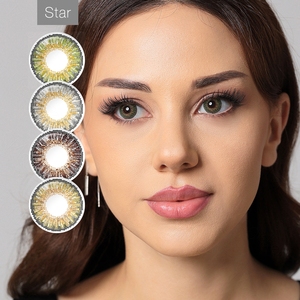
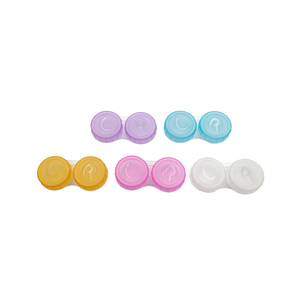
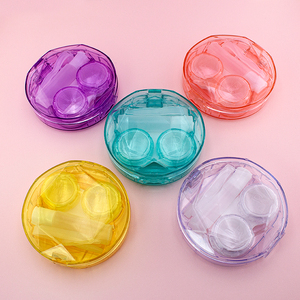
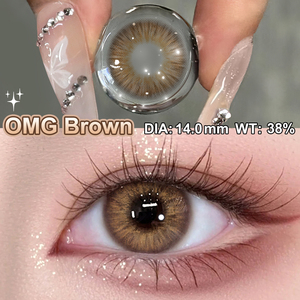
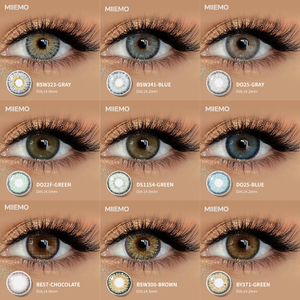
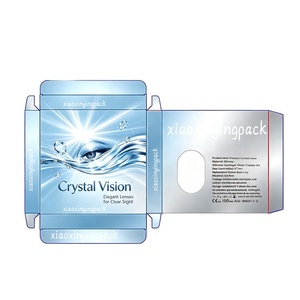
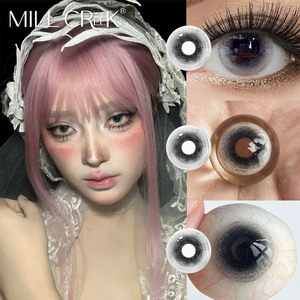
Localized Application Scenarios across Nigerian Retail & Professional Channels
To achieve high product turn-rates and maximum profitability in the Nigerian market, distributors must align their stock keeping units (SKUs) with specific regional wearing habits and cultural events. Our market research in Lagos, Abuja, and Ibadan reveals four major localized application scenarios:
1. Bridal Makeup & "Owambe" Party Glamour
Nigerian weddings and high-profile social gatherings ("Owambe") require high-definition eye cosmetics. Brides and partygoers seek high-opacity 3-tone tones (Hazel, Honey, Platinum Grey, Emerald) that stand out sharply against dark skin tones and beneath intense studio flash lighting. Lenses with 14.5mm enlarging diameters are top sellers in Lagos salon networks.
2. Nollywood Film Production & Theatrical Cosplay
Nigeria’s Nollywood film industry—the second largest in the world by film output—creates constant demand for special effects (SFX) and character lenses. From supernatural thriller productions to local music video shoots in Lekki, crazy/Halloween high-pigment white-out, red-vampire, and anime contacts are essential tools for costume artists.
3. Corporate & University Youth Daily Wear
In commercial hubs like Victoria Island and university campuses like UNILAG, young professionals and Gen Z students wear subtle natural brown, olive green, and chocolate contact lenses for daily enhancement. This demographic prioritizes high moisture retention to counteract air-conditioned offices and long computer screen exposure.
Optoelectronic & Material Specifications for Sub-Saharan African Climate
Standard European or Asian contact lens formulations often suffer from high dehydration rates when exposed to Nigeria's tropical climate (average ambient temperature 28°C–35°C) or during the dry, dusty Harmattan season (December to February). Below is our factory's optimized material specification matrix designed specifically for tropical resilience:
| Parameter | Standard Export Spec | Sub-Saharan Optimized Spec | Nigerian Market Advantage |
|---|---|---|---|
| Base Curve (BC) | 8.5 mm | 8.6 mm - 8.7 mm | Perfect anatomical fit for African corneal curvature, eliminating tightness. |
| Water Content | 38% Hydrogel | 42% - 55% HEMA / Hydrogel | Optimal balance between ocular breathability and resistance to rapid air-drying. |
| Pigment Tech | Surface Printing | 3-Layer Bio-Sandwich Tech | Zero direct dye contact with cornea; prevents irritation during dust/dust-mite exposure. |
| Oxygen Permeability | 8.5 Dk/t | 15 - 25 Dk/t (Silicone Hydrogel) | Prevents corneal hypoxia during extended 12+ hour wearing periods in hot climates. |
| Diameter Range | 14.0 mm | 14.2 mm - 14.5 mm | Provides requested dolly-eye enlarging effect favored in West African cosmetics. |
Macro Development Trends Shaping the Nigerian Contact Lens Market (2025–2030)
Understanding future growth dynamics allows Nigerian optical entrepreneurs to position their brand portfolios effectively ahead of competitors. Our SEO data mining and trade analytics highlight three primary growth drivers:
1. Hyper-Growth of Social Commerce & Micro-Vendors
Over 70% of cosmetic contact lenses in Nigeria are now sold directly via Instagram, TikTok, WhatsApp business catalogs, and Jumia/Konga storefronts. Micro-beauty entrepreneurs in Lagos and Abuja are creating private label brands. By providing low MOQ packaging (starting at 500 pairs per color), Chinese manufacturers enable local influencers to launch proprietary lens lines with low capital risk.
2. Surge in Demand for Prescription Colored Contacts (Myopia Correction)
Historically, color lenses were viewed purely as non-prescription fashion items. However, urban sight correction needs are surging across West Africa. Nigerian consumers with myopia (short-sightedness) increasingly reject heavy spectacles in favor of prescription colored contacts (ranging from -1.00 to -8.00 Diopters). Offering dual-function lenses represents a high-margin growth vector for Nigerian optometry clinics.
3. Premium Shift Towards Silicone Hydrogel Materials
As consumer education improves across Nigeria, wearers are actively seeking "dry-eye resistant" and "breathable" lenses. Silicone Hydrogel materials, which offer 3x to 5x greater oxygen transmissibility than conventional poly-HEMA lenses, are quickly dominating upscale boutiques in Ikeja and Victoria Island.
Why Partner with Mylensora Technology? Our Direct Factory Advantages
Navigating international B2B procurement requires a manufacturer with demonstrated operational scale, stringent quality assurance, and proven export experience. Mylensora (Haipurecon) stands out as a leading Chinese contact lens manufacturer:
Massive Production Capacity & In-House R&D
Our Phase I automated manufacturing complex produces over 120 million lenses annually across 8 automated casting lines. Integrated design, mold-making, lathe-cutting, and polymer synthesis occur completely in-house without outsourcing.
Full Regulatory Documentation & Certification
Our factory holds comprehensive NMPA (CFDA) medical device manufacturing licenses, ISO 13485 quality system standards, and CE certifications. We provide full technical dossier support (Free Sale Certificates, Certificates of Analysis, Material Safety Data Sheets) required by Nigerian importers for smooth NAFDAC product registration.
Custom Private Label & Packaging OEM
We offer end-to-end branding support: custom blister foils, localized English/French cardboard packaging boxes, color-matched lens cases, and marketing display trays. Our in-house design team produces retail-ready graphics within 48 hours.
Frequently Asked Questions (FAQ) by Nigerian Importers & Distributors
Below are practical, expert responses to common regulatory, logistical, and technical questions encountered when importing contact lenses from China to Nigeria:
1. What certifications are required by NAFDAC to import contact lenses into Nigeria? +
2. How do you prevent color lenses from fading or degrading in high Nigerian heat? +
3. What is the recommended delivery timeline and shipping channel to Lagos or Abuja? +
4. Can I customize private label boxes with my own brand name and contact details? +
5. What are your Minimum Order Quantities (MOQ) for Nigerian startups? +
6. Which colors have the highest sales volume among Nigerian wearers with naturally dark brown eyes? +
5-Step Procurement Strategy for Launching a Contact Lens Brand in Nigeria
Follow this structured OEM roadmap to minimize supply chain risk and maximize gross margins:
Step 1: Sample Testing & Iris Coverage Assessment
Request factory sample kits across top 3-tone shades to evaluate opacity over naturally dark West African eyes and test hydrogel hydration stability under local environmental conditions.
Step 2: Regulatory Review & Dossier Collection
Gather ISO 13485, CFDA, and Free Sale Certificates from our team to submit to NAFDAC for product clearance and import authorization.
Step 3: Packaging & Artwork Finalization
Select blister box specs, add bilingual storage warnings, specify barcode parameters, and finalize localized brand artwork with our engineering team.
Step 4: Deposit & Automated Mass Production
Initiate production upon 30% deposit. Automated injection molding, lathe cutting, hydration, sandwich pigment coating, and high-pressure steam sterilization are completed within 15-25 days.
Step 5: Pre-Shipment Quality Control & Air Freight
Receive 100% finished product inspection reports before balance settlement. Fast air cargo dispatch directly to Lagos, Abuja, or Port Harcourt for rapid retail distribution.
Start Sourcing Factory-Direct Contact Lenses for Nigeria Today
Partner with China’s premier medical-grade contact lens manufacturer. Gain competitive wholesale pricing, premium high-opacity color formulas, and full OEM support for your brand.