
Strategic Sourcing Guide: Color Contact Lens Export Dynamics to Kazakhstan
A comprehensive analysis of consumer behavior, ophthalmic engineering requirements, regulatory compliance under EAEU frameworks, and cross-border supply chain logistics from China to Central Asia.
1. Executive Summary & Market Intelligence: Kazakhstan's Growing Optical & Beauty Sector
The Republic of Kazakhstan represents the economic engine of Central Asia, boasting the region's highest per-capita income and a rapidly modernizing retail ecosystem. Driven by urban centers such as Almaty, Astana, and Shymkent, the demand for cosmetic contact lenses, corrective vision enhancers, and specialized cosplay lenses has experienced exponential compound annual growth (CAGR > 14.2%). As Gen Z and Millennial demographics increasingly align with international beauty trends—amplified by digital platforms like TikTok and Instagram—the appetite for natural eye color modification and fashion eye accessories has shifted from niche novelty to mainstream daily lifestyle usage.
For Kazakh importers, optical chain store operators, and digital beauty brands, partnering directly with certified Chinese contact lens manufacturers provides a decisive competitive advantage. Chinese manufacturers, led by enterprise facilities like Mylensora Technology Co., Ltd., offer world-class cleanroom manufacturing, automated casting technology, and unparalleled economies of scale. However, navigating the Kazakh import landscape requires a nuanced understanding of local ophthalmic expectations, extreme weather material dynamics, Eurasian Economic Union (EAEU) regulatory compliance, and efficient land-bridge logistics.
2. Climatic Adaptation & Ophthalmic Polymer Engineering for Central Asia
Kazakhstan features a harsh continental climate characterized by scorching dry summers (reaching over +35°C in southern regions like Shymkent) and severely freezing winters (dropping below -30°C in northern cities like Astana). In addition, indoor environments during winter rely heavily on intensive central heating, resulting in extremely low ambient relative humidity (often below 20%).
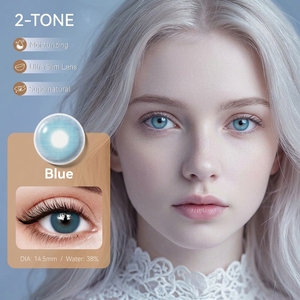
Standard high-water-content contact lenses (e.g., 55% to 58% water content) are paradoxically detrimental in dry continental climates. High-water lenses act like sponges; when exposed to dry air, they evaporate moisture rapidly and draw tear fluid away from the user's cornea, leading to severe dry-eye syndrome, keratitis risk, and lens warping. To optimize comfort for Kazakh end-users, Mylensora engineers soft contact lenses with a calibrated 38% water content low-dehydration hydrogel matrix (HEMA / Polymacon) and advanced Silicone Hydrogel polymers.
| Polymer Parameter | Standard High-Water Lens (58%) | Mylensora Optimized Low-Water Lens (38%) | Mylensora Silicone Hydrogel Series |
|---|---|---|---|
| Dehydration Rate in Dry Air | High (>2.5% per hour in low humidity) | Very Low (<0.8% per hour in low humidity) | Ultra-Low (<0.5% per hour with moisture locking) |
| Oxygen Transmissibility (Dk/t) | Moderate (~15-20) | Optimized Structural (~25-28) | Exceptional High (>80-110) |
| Tear Retention & Comfort | Dries quickly indoors during winter | Sustains all-day tear film integrity | Superior extended wear comfort |
| Resistance to Protein Deposits | Ionic surface attracts lipid/protein build-up | Non-ionic material resists lipid adhesion | Plasma-treated surface anti-fouling layer |
| Kazakhstan Climate Suitability | Poor (Causes ocular dryness in Astana winters) | Excellent (Ideal for steppe & indoor heating) | Premium Grade (Ideal for sensitive & dry eyes) |
Furthermore, Mylensora’s non-ionic lens material ensures that tear proteins and environmental dust particles—common during dry steppe winds—do not readily adhere to the lens surface, keeping vision crisp and eyes healthy throughout extended wear.
3. Manufacturing Excellence & Bio-Compatible Color Encapsulation Technology
As a medical device manufacturer integrating R&D, mold design, cast molding, lathe cutting, and sterile packaging, Mylensora Technology operates in full compliance with ISO 13485 quality management systems and NMPA (formerly CFDA) Class III medical device standards. When manufacturing color contacts for global export, eye safety is the absolute prerequisite.
Sandwich Color Lock Technology
Color pigments are completely encapsulated between two transparent layers of HEMA hydrogel material. The dye never touches the cornea or conjunctiva, eliminating chemical leeching, eye irritation, or allergic reactions.
Automated Cast Molding Precision
Utilizing high-precision CNC molds imported from Germany and Japan, our automated cast molding lines guarantee 99.8% parameter consistency in Base Curve (BC 8.6mm) and Diameter (14.0mm to 14.5mm), eliminating lens variance across batches.
Full-Spectrum Ophthalmic QC
Every single lens undergoes 100% automated optical inspection (AOI) for edge smoothness, center thickness uniformity, surface defect detection, and spectrophotometric color shade verification prior to blister sealing and steam sterilization.
Localized Product Applications Across Kazakhstan Commercial Channels
Aligning product specifications with distinct Kazakh retail segments, cultural events, and healthcare pathways to maximize sell-through velocity.
A. Everyday Natural Enhancers for Urban Retail & Beauty Boutiques
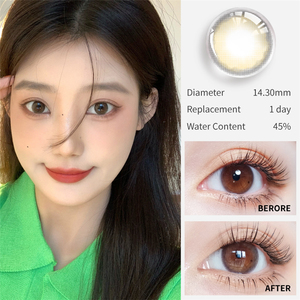
In major metropolitan markets like Almaty and Astana, young professionals and fashion-conscious consumers seek subtle, natural eye tone modifications for workplace and daily social wear. Our Natural Blue, Rich Brown, and Hazel 14.2mm–14.5mm collection features a soft limbal ring with a multi-tone radial dot matrix. This creates a soft enlargement effect that blends naturally with Central Asian dark brown eyes, satisfying demand in retail beauty stores, cosmetics chains, and e-commerce platforms like Kaspi.kz.
B. Cosplay, Anime Conventions & Halloween Fandom Culture
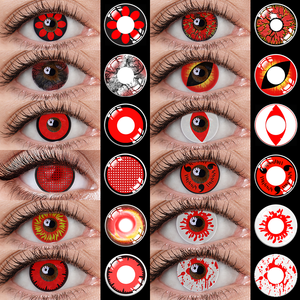
Kazakhstan has seen a massive surge in youth subcultures, comic conventions (e.g., Almaty Geek Studio events, local cosplay competitions), and Halloween celebrations. Specialized special-effect lenses—such as our Chainsaw Man Cosplay Series and opaque Vampire Red Crazy Contacts—fill an urgent, high-margin niche. These lenses utilize full-coverage opaque pigments that render striking, vibrant primary colors regardless of background iris darkness.
C. Prescription Myopia Corrective Colored Lenses for Optical Clinics
In Kazakhstan, over 35% of urban youth require visual correction for myopia (short-sightedness). Modern wearers dislike choosing between vision correction and cosmetic beauty. Mylensora provides Prescription Colored Myopia Lenses spanning power ranges from -0.50D to -10.00D (in precise 0.25D and 0.50D increments). Optical stores and optometry clinics can offer complete dual-function cosmetic corrective solutions directly from stock.
D. Optical Chain Bundling: CR-39 Lenses & Private Label Accessories
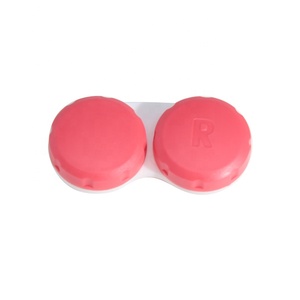
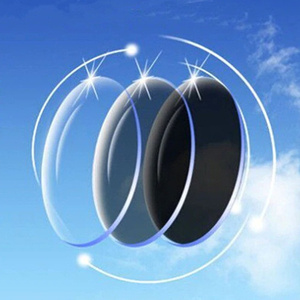
Full-service optical importers in Kazakhstan frequently bundle contact lenses with ophthalmic frame lenses and lens maintenance kits. By combining high-volume items like our 1.56 Index CR-39 Photochromic AR Lenses with Custom PP Lens Cases and travel kits, distributors can present complete eyecare ecosystems under their own localized brand identity, dramatically expanding gross profit margins.
5. Regulatory Compliance Framework: Navigating Kazakh & EAEU Medical Device Standards
Because contact lenses are categorized as Class IIb / Class III medical devices (depending on wearing duration and corrective function), importing into Kazakhstan mandates strict adherence to the regulatory codes established by the Ministry of Healthcare of the Republic of Kazakhstan and the Eurasian Economic Union (EAEU).
Working with an unaccredited manufacturer risks shipment seizure at border customs, heavy administrative fines, or total blacklist sanctions. Mylensora provides complete technical documentation dossiers to streamline your local registration process:
- ISO 13485:2016 Certification: Globally recognized medical device quality management system validation covering design, production, and sterilization.
- NMPA / CFDA Class III Medical Registration: Stringent biological safety, cytotoxicity, ocular irritation, and systemic toxicity test reports issued by state-accredited testing laboratories.
- Certificate of Analysis (CoA) & Sterilization Lot Records: Provided automatically with every production batch to verify ethylene oxide (EO) gas residue zero-toxicity limits and optical power tolerance compliance.
- Bilingual Packaging & Labeling Design Support: EAEU regulations mandate that medical device secondary packaging and user instruction leaflets contain accurate translation in both Kazakh (Қазақша) and Russian (Русский) languages, detailing base curve, diameter, power, expiry date, manufacturer address, and EAC mark placement. Mylensora's in-house design team executes print-ready artwork matching these legal criteria.
6. Cross-Border Supply Chain Architecture: China to Kazakhstan Logistics Routes
Efficient shipping logistics are vital for maintaining inventory turnover without tying up excess working capital. Thanks to the Belt and Road Initiative and shared land borders, shipping from China to Kazakhstan offers fast overland transit options:
A. Khorgos Dry Port Rail Express
Consolidated container shipping from our manufacturing base directly through the Khorgos / ICBC border gateway into Almaty hub railway freight depots. Transit time: 7 to 10 days. Recommended for high-volume wholesale shipments.
B. Overland Trucking Freight
Dedicated temperature-regulated trucking routes from Urumqi / Khorgos straight to Astana, Karaganda, or Shymkent logistics centers. Ideal for medium-weight bulk orders with flexible custom clearance routines. Transit time: 5 to 8 days.
C. Express Air Courier Freight
Urgent shipments, promotional launches, and initial OEM product samples are dispatched via international air freight (SF Express International, DHL, FedEx) landing directly at Almaty International Airport (ALA). Transit time: 3 to 5 days.
Frequently Asked Questions by Kazakh Wholesale Importers
Clear, direct answers to common questions regarding minimum order quantities, private labeling, shipping terms, and regulatory assistance.
Is Mylensora a direct contact lens manufacturer or a trading agent? +
What are your Minimum Order Quantities (MOQ) for Kazakh buyers? +
Can you supply custom box packaging translated into Kazakh and Russian? +
How do your lenses perform on dark brown Asian iris tones? +
What regulatory certificates will you provide for customs clearance in Kazakhstan? +
What is the average lead time for production and shipping to Almaty or Astana? +
Factory Advantage & Global OEM Capabilities
Building long-term, profitable partnerships with Kazakh distributors through superior production capacity, rigorous testing, and low total cost of ownership.
Phase I & II Scale Manufacturing
Our Phase I facility delivers an annual capacity exceeding 120 million lenses. With Phase II expansion underway, we are building one of Asia’s largest contact lens production hubs, ensuring your brand never encounters stockouts during peak retail seasons.
Unbeatable Factory-Direct Value
By purchasing direct from the primary producer, Kazakh buyers capture maximum profit margin depth. Our automated production efficiency keeps per-unit costs low while maintaining strict compliance with medical-grade quality standards.
Dedicated OEM/ODM Branding Support
From custom color tone R&D to box package engineering and localized marketing asset support, our experienced international trade department acts as your dedicated product management team from concept to final retail placement.