Featured Cosmetic & Prescription Contact Lenses
Explore our CE & NMPA-compliant wholesale contact lenses, designed with multi-layer sandwich pigment technology and high oxygen permeability.
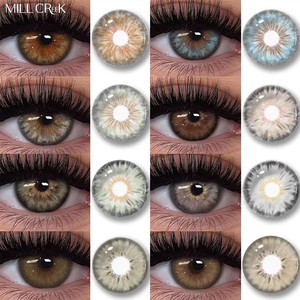
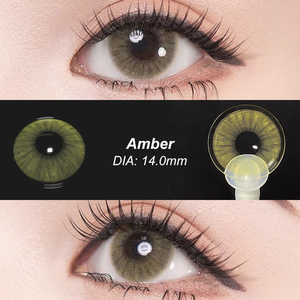
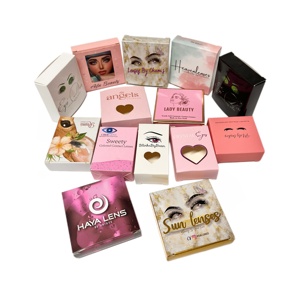
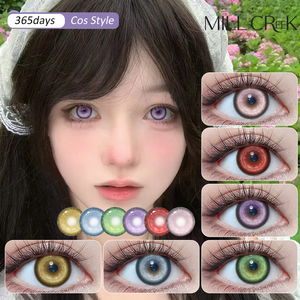
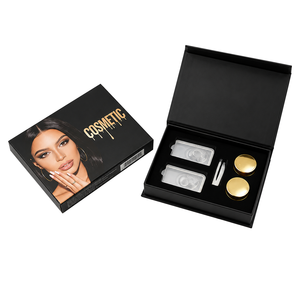
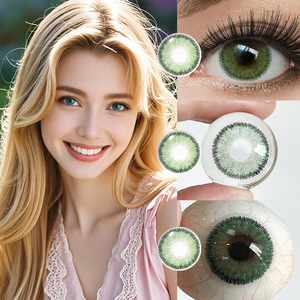
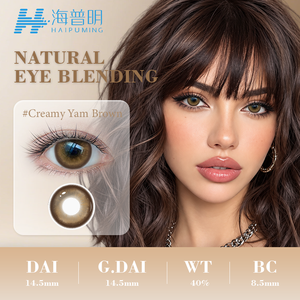
Leading Asian Contact Lens Manufacturer: Integrated Precision Engineering
Mylensora Technology Co., Ltd. operates a state-of-the-art medical device production complex, combining optical R&D, automated cast molding, bio-compatible polymer synthesis, and international regulatory execution.
Vertical In-House Integration
Unlike third-party optical traders or white-label intermediaries, Mylensora unifies optical lens design, polymer chemical formulation, precision mold manufacturing, sterile blister packaging, and direct B2B export support under one accredited roof. This guarantees absolute traceability and eliminates unvetted markups.
Class III Cleanroom Standard
Our manufacturing environment operates under Class 100,000 cleanrooms equipped with Automated Optical Inspection (AOI) technology. Every individual color contact lens undergoes 100% digital edge inspection, verifying base curve accuracy, optical power centering, and zero surface defects before saline hydration.
Proprietary "Sandwich" Tech
To eliminate pigment migration and physical corneal friction, our cosmetic contact lenses utilize dual-layer micro-encapsulated sandwich coloration. The non-toxic micro-pigments are permanently locked between bio-compatible poly-HEMA layers, ensuring zero pigment contact with ocular tissue.
Ophthalmic Lens Polymers: Technical Benchmarking Matrix
Selecting the optimal lens material dictates physiological comfort, tear-film stability, and wearing schedules. Comparative analysis for global optical buyers and procurement specialists.
| Polymer Classification | Monomeric Composition | Water Content (%) | Oxygen Permeability ($Dk/t$) | Modulus (MPa) | Primary Target B2B Channel |
|---|---|---|---|---|---|
| Standard Hydrogel | Poly-HEMA (Hydroxyethyl methacrylate) | 38% - 42% | 15 - 20 | 0.30 - 0.40 | Budget-Conscious Fashion & Cosmetic Retailers |
| High-Moisture Hydrogel | HEMA + NVP (N-Vinylpyrrolidone) | 55% - 58% | 25 - 30 | 0.25 - 0.35 | Daily Disposable Beauty & E-Commerce Brands |
| Next-Gen Silicone Hydrogel | Fluoro-Siloxane Macromer + HEMA | 45% - 50% | 80 - 120 | 0.50 - 0.70 | Premium Ophthalmic Chains & Rx Colored Lines |
| MPC Hydrogel (Biomimetic) | 2-Methacryloyloxyethyl Phosphorylcholine | 40% - 45% | 35 - 45 | 0.35 - 0.45 | Sensitive Eye & Extended Wear Luxury Market |
Technical Information Gain: Dehydration Rate vs. Wearing Comfort
A common misconception among optical buyers is that higher water content always yields greater comfort. In reality, high-water hydrogel lenses (>55%) rely on environmental tear fluid to maintain structural hydration in dry or air-conditioned environments, leading to late-day dry eye symptoms. For long-duration cosmetic wear, 38%-42% Poly-HEMA or Silicone Hydrogel materials maintain dimensional stability, low moisture evaporation rates, and structural edge integrity over 12+ hours of wear.
Future Procurement Trends in Wholesale Cosmetic Lenses
Strategic insights for optical brand owners, distributors, and procurement executives navigating shifting global compliance, environmental standards, and consumer demand.
1. Accelerating Shift to Daily Disposable Cosmetic Formats
While yearly disposable color lenses historically dominated emerging markets due to lower price points, global procurement data shows a rapid 18.5% year-over-year shift toward daily disposables. Consumer awareness regarding ocular hygiene, zero maintenance hassle, and compliance with eye care professional (ECP) recommendations are driving brands to order high-volume 10-pack and 30-pack daily blister configurations.
2. Regulatory Harmonization & Traceability (MDR & NMPA)
Global customs authorities are tightening classification audits for cosmetic contact lenses, re-classifying them strictly as Class III Medical Devices regardless of whether they contain corrective power (-0.00 diopter planno lenses included). Wholesalers must partner with factories holding complete technical documentation files (TCF), ISO 13485 certification, and audited bio-compatibility test reports (ISO 10993) to avoid costly port detentions.
3. Hyper-Natural "Iris-Mimetic" Printing Precision
Flat, stark 3-tone color block designs are giving way to digital multi-layer micro-dot matrix printing that simulates real human iris textures. Trends emphasize subtle limbal rings, radial striations, and translucent pupil blending zones that allow dark natural brown eyes to achieve realistic light hazel, olivine green, and slate grey tones without artificial pixelation.
4. Sustainable Blister Packaging & Reduced Plastics
With environmental sustainability influencing enterprise retail purchasing, manufacturers are replacing traditional heavy polypropylene (PP) blister cups with ultra-thin, recyclable aluminum foil membranes and biodegradable cardstock secondary boxes. Automated high-speed heat sealing eliminates micro-leaks while reducing overall packaging carbon footprint by over 24%.
Product Development Trends: Convergence of Optics & Aesthetics
How advanced chemical engineering is blending vision correction, UV protection, and fashion cosmetics into high-margin product offerings.
UV-Blocking Matrix Integration
Modern cosmetic contact lenses are increasingly synthesized with UV-absorbing monomers (Class 2 UV blocking) that filter >85% UVA and >96% UVB radiation. This protects delicate internal ocular structures like the crystalline lens and retina from photo-oxidative stress without distorting color vibrancy.
Prescription Functional Optics
Cosmetic buyers no longer compromise on optical correction. High-precision cast molding allows seamless integration of spherical myopia correction powers (ranging from -0.50D to -10.00D) into hyper-pigmented 14.0mm to 14.5mm cosmetic lenses, achieving sub-0.25D optical power precision across all batch lots.
Special Effect & Cosplay Innovations
From high-opacity full-coverage blackout and sclera lenses to theatrical UV-reactive fluorescent pigments, special-effects lenses represent a booming seasonal niche. Technological advancements ensure these high-pigment density designs retain crucial oxygen channels to prevent corneal hypoxia during costume wear.
Frequently Asked Sourcing & Procurement Questions
Clear, authoritative answers regarding manufacturing lead times, custom OEM branding, quality assurance protocols, and global export compliance.
Start Your Custom Contact Lens Manufacturing Project Today
Connect directly with our senior optical engineering and OEM sales team. Request factory sample kits, full technical compliance dossiers, and wholesale volume pricing schedules.