Evaluating Global Color Contacts Manufacturers: The B2B Procurement Paradigm
The global market for cosmetic and prescription color contact lenses has evolved from a niche fashion vertical into a highly regulated, tech-driven segment of the medical device industry. Sourcing officers, brand owners, and healthcare distributors face multi-faceted challenges: navigating complex regulatory landscapes across different target regions, guaranteeing ocular safety and biocompatibility, maintaining batch-to-batch color stability, and managing lean supply chain turnarounds.
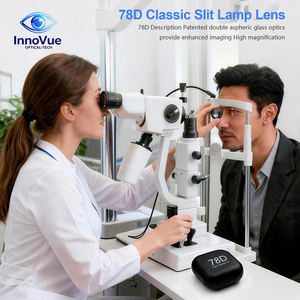
Selecting a top trusted color contacts manufacturer requires looking beyond basic unit pricing. Enterprise buyers must conduct rigorous audits evaluating a factory's material polymer science, micro-encapsulation machinery, optical surface lathe tolerances, automated visual inspection systems (AOI), and global certification portfolios (such as ISO 13485, NMPA/CFDA Class III medical device licenses, and CE compliance).
Polymer Science & Dk/t
High oxygen transmissibility hydrogel and silicone-hydrogel substrates engineered to eliminate corneal hypoxia during extended wear schedules.
Bio-Lock Encapsulation
Triple-layer "sandwich" technology embedding organic non-ionic pigments entirely inside the lens matrix, preventing pigment contact with corneal tissues.
Precision Cast Molding
Fully automated micro-injection molds delivering consistent base curves (BC: 8.5mm - 8.7mm) and flawless edge-profile comfort.
Enterprise Advantages: Mylensora Technology Manufacturing Infrastructure
At Mylensora Technology Co., Ltd., we operate a fully integrated industrial ecosystem uniting contact lens structural design, advanced optical R&D, high-speed automated production, secondary packaging customization, and global trade compliance. Built upon international cleanroom standards (Class 100,000 environment), our manufacturing facility eliminates traditional intermediary costs, delivering pure factory-direct value to B2B clients worldwide.
Our Phase I production base yields an annual capacity of over 120 million lenses across eight automated production lines specializing in color cosmetic contacts, myopia functional corrective lenses, astigmatism torics, and high-comfort silicone hydrogels. With Phase II construction underway, Mylensora is establishing one of Asia's largest, state-of-the-art contact lens production centers.
Core OEM/ODM Capabilities
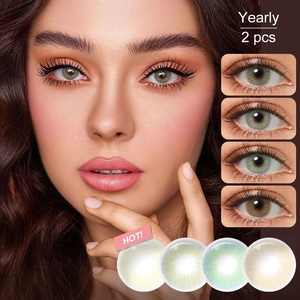
- Custom Pattern & Iris Design: In-house graphic studio crafting multi-tone, natural iris simulation, cosplay, and high-contrast cosmetic effects.
- Flexible Replacement Cycles: Daily disposables, monthly hydrogels, half-year, and yearly wear configurations.
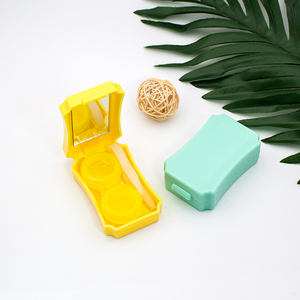
- Versatile Packaging Formats: Sealed aluminum foil blisters, glass vials, custom folding carton gift boxes, and travel kit sets.
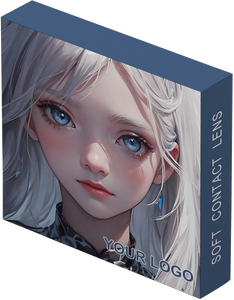
- Private Label Branding: Turnkey branding solutions including multilingual compliance labeling, box artwork printing, and barcode serialization.
Quality Governance & International Presence
- Medical Device Certifications: Fully accredited under NMPA (formerly CFDA) and ISO 13485 quality management systems.
- Zero-Defect Quality Control: 100% automated optical inspection (AOI) checking edge integrity, surface flaws, and optical power precision.
- Global Trade Recognition: Regular featured exhibitor at leading optical expos including MIDO (Milan), HKTDC Optical Fair (Hong Kong), and Dubai Vision Plus.
- Supply Chain Agility: Extensive inventory reserves for fast-turnaround stock lines alongside streamlined low-MOQ custom project schedules.
Future Procurement Trends in Cosmetic & Functional Eyewear (2025–2030)
Strategic procurement managers must align their product portfolios with shifting end-user preferences and technological breakthroughs. The next era of color contact lens manufacturing is defined by three major market vectors:
| Procurement Trend Vector | Core Technological Shift | Market Demand Impact | Sourcing Strategy Recommendation |
|---|---|---|---|
| 1. Silicone Hydrogel Dominance | High oxygen permeability (Dk/t > 80), low modulus material formulations. | Consumers prioritizing 12+ hour wearing comfort without ocular dry-eye syndrome. | Shift baseline OEM orders toward silicone-hydrogel daily disposables to secure higher retail margins. |
| 2. Inclusive & Natural Aesthetic Ranges | Micro-dot matrix printing matching specific skin tones and dark iris bases. | Surge in demand for subtle, non-artificial eye enhancement across diverse global demographics. | Develop custom multi-tone color swatches calibrated for dark brown/black natural pupils. |
| 3. Dual-Functional Corrective Color Lenses | Integration of high-precision myopia power curves (-0.50D to -10.00D) into cosmetic lines. | Over 65% of cosmetic color wearers require simultaneous vision correction. | Partner with manufacturers offering expansive power inventory matrices to prevent stockouts. |
| 4. Sustainable Packaging & Eco-Foil | Recyclable PP blister trays and reduced-plastic outer packaging boxes. | Stringent European and North American environmental packaging regulations. | Audit factory packaging supply chains for eco-friendly materials and compact dimensional footprints. |
Product Development & R&D Innovations in Contact Lens Manufacturing
Pioneering contact lens factories are investing heavily in material chemistry and optical surface modeling. Key innovation frontiers engineered at Mylensora include:
- Interlocking Moisture-Matrix Technology: Incorporating hyaluronic acid (HA) and hydrophilic wetting agents directly into the monomer liquid prior to polymerization, ensuring long-lasting hydration throughout the lens lifespan.
- Aspheric Optical Geometry: Utilizing advanced wavefront aberration control to sharpen visual acuity, reduce spherical aberration, and improve night vision clarity for prescription color contact wearers.
- Laser-Guided Micro-Color Pigmentation: Utilizing automated high-speed multi-color printing machines capable of printing intricate, multi-layered patterns with 5-micron precision, replicating the depth of a natural human iris.