Featured Circle Contact Lenses Wholesale Catalog
Direct factory production offering high oxygen transmissibility, sandwich pigment technology, and customizable aesthetic diameters for global B2B procurement.
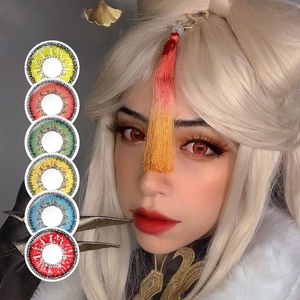
Hot Sales Pseyeche Halloween Contact Lenses Crazy Lens Dolly Eye Cosplay Soft Lens Circle Lenses Lentillas De Colores
View Product Details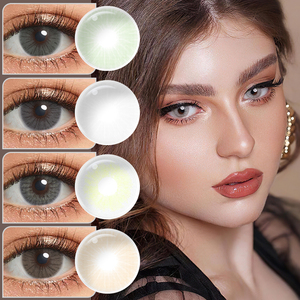
Wholesale Freshgo Hidrocor Contact Lenses Comfortable Circle Lens Realcon Yearly Beauty Makeup Coloured Contact Lenses
View Product Details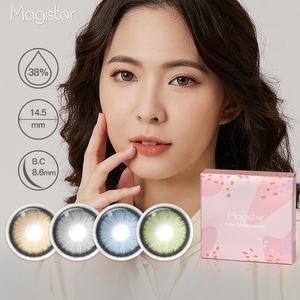
Magister Diamond N 6 Months Cosmetic Colored Contacts Color Contact Lenses With Circle Big Eye Colored Contact Lens
View Product Details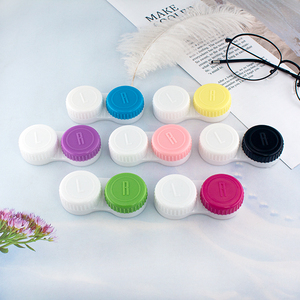
Outstanding Quality Custom Spheric Soft Contact Daily Spherical Lens Spherical Lens
View Product Details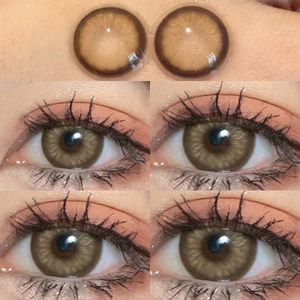
Haipurecon Best Prescription Soft Colored Contact Lenses for Astigmatism-Three Tone 14mm Diameter
View Product Details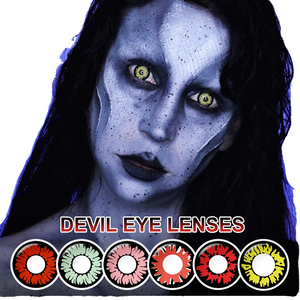
Hot Seller PSEYECHE Halloween Contact Lenses Crazy Sharingan Cosplay Soft Colored Contacts for Cosplay and Festivals
View Product Details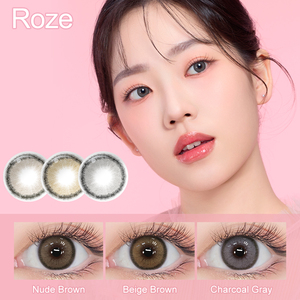
Free Shipping Magister Roze Eye Lens with Power Natural Colored Contact Lenses Prescription Lenses Eye Contact Lentes De Contact
View Product Details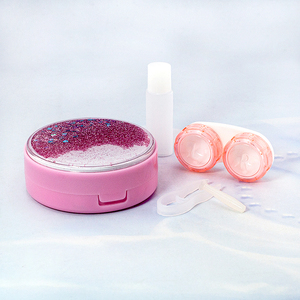
Cheap Contact Lenses Factory Wholesale Colored Lens Color Contact Lens Cases Soft Yearly Cosmetics Contacted Len
View Product DetailsEvaluating Top Circle Contact Lens Manufacturers: B2B Sourcing Criteria
The global cosmetic contact lens market has undergone a dramatic transformation over the past decade. Driven by shifting consumer preferences toward non-surgical eye enhancement, dramatic cosplay transformations, and everyday natural eye enlargement, circle contact lenses—characterized by their defined outer limbal ring—have become a core revenue engine for optical chains, eCommerce beauty brands, and pharmaceutical distributors worldwide. However, selecting a qualified circle contact lens manufacturer requires rigorous technical evaluation that goes far beyond aesthetic pattern variety.
As Class III medical devices in most regulatory jurisdictions (including the FDA, EU CE framework, and China NMPA), contact lenses demand non-negotiable manufacturing precision. Leading manufacturers like Mylensora Technology Co., Ltd. integrate complete end-to-end industrial architecture—combining optical lens design, specialized polymer chemistry research, automated cast-molding, micro-pigment sandwich encapsulation, and cleanroom packaging within a single vertically integrated ecosystem.
Core Industry Technical Metric: Modern circle contact lens procurement focuses on the balance between high oxygen transmissibility ($Dk/t$), hydration maintenance, structural elasticity, and pigment encapsulation safety. Authentic "Sandwich Technology" guarantees zero direct contact between pigment dye particles and the corneal surface.
Key Manufacturing Infrastructure Indicators for B2B Importers
When auditing top circle contact lens factories, international procurement directors must verify specific infrastructural baseline benchmarks to ensure long-term product consistency, regulatory compliance, and supply continuity:
Class 100,000 Cleanroom Production
Maintains strict environmental sterilization, particle control, and bioburden management during monomer injection, curing, and blister sealing to prevent ocular infections.
Bio-Compatible Polymer R&D
Proprietary formulations using HEMA-GMA hydrophilic hydrogels and advanced Silicone Hydrogel matrices to optimize tear exchange and cut ocular dehydration.
Fully Automated Cast Molding
Computerized optical molding machinery reduces edge variation tolerances to under $\pm 0.02\text{mm}$, ensuring consistent base curve ($BC$) stability across mass production runs.
Mylensora Technology: Enterprise Manufacturing Scale & Advantages
As one of Asia's primary contact lens manufacturing hubs, Mylensora Technology Co., Ltd. serves global brand owners, regional wholesalers, and chain optical clinics through tailored OEM, ODM, and private-label production frameworks. The enterprise operates under a single cohesive mission: delivering optometric excellence alongside highly competitive factory-direct pricing.
| Manufacturing Dimension | Mylensora Enterprise Capability Baseline | Strategic Value for B2B Sourcing Partners |
|---|---|---|
| Annual Production Output | 120 Million Lenses (Phase I Complete); Phase II Expansion Underway | Guarantees massive production scalability without supplier switching as your brand scales globally. |
| Quality Management Systems | Certified under NMPA (formerly CFDA), ISO 13485, and CE Standards | Streamlines international regulatory registration dossiers and custom clearance documentation. |
| Color Embedding Technology | 3-Layer Micro-Pigment Sandwich Encapsulation Matrix | Complete eye protection; prevents pigment degradation and friction-induced ocular surface wear. |
| Optical Parameter Range | Plano (0.00) to -10.00D Myopia; Custom Toric Cylinder for Astigmatism | Enables full catalog coverage across both purely cosmetic and functional corrective segments. |
| OEM / ODM Customization | Bespoke pattern design, private-label blister foil, and custom outer packaging | Total brand exclusivity with full IP protection for proprietary pattern designs and color shades. |
With an ongoing presence at premier international optical trade summits—including MIDO Milan, the HKTDC Hong Kong International Optical Fair, and Dubai Vision Plus Expo—Mylensora aligns its factory operations directly with changing global consumer trends and regional optical market demands.
Future Sourcing & Procurement Trends in Circle Contact Lenses (2025–2030)
To maintain market leadership, B2B purchasing managers must align their inventory plans with upcoming industrial technology shifts and consumer behavioral changes. The next decade will redefine circle lens manufacturing across several key vector shifts:
1. Rapid Shift toward High-Dk Silicone Hydrogel Formulations
While traditional HEMA (Hydroxyethyl methacrylate) hydrogels remain popular due to low production costs and soft initial wear feel, market demand is shifting toward Silicone Hydrogel circle lenses. Silicone hydrogels offer up to 4x higher oxygen transmissibility ($Dk/t > 80$), addressing consumer safety concerns regarding corneal hypoxia, red eye, and end-of-day dryness during extended wear. Sourcing partners are increasingly allocating up to 40% of their private-label inventory to silicone hydrogel formulations.
2. Dominance of Daily Disposable (1-Day) Replacement Cycles
Although annual (12-month) and quarterly lenses historically dominated the cosmetic circle lens segment in developing markets, mature markets in North America, Europe, and East Asia are moving rapidly toward daily disposable circle lenses. Daily disposables remove the need for lens care solutions, drastically lower infection risks associated with compliance failure, and generate recurring subscription-style reorder revenue for retail brands.
3. Integration of Astigmatism (Toric) & Multifocal Functionality
A major gap in the historical cosmetic lens market was the lack of aesthetic options for astigmatic users. Advanced factories now manufacture custom Toric Colored Circle Lenses that feature back-surface prism ballast dynamic stabilization. This optical design keeps the cylinder axis steady while maintaining an enlarging limbal ring effect, opening an untapped consumer segment estimated at 25% of all vision-corrected wearers.
4. Eco-Friendly Sustainable Packaging Architectures
Global regulatory bodies and consumer groups are pressing optical brands to minimize single-use plastic waste. Leading contact lens manufacturers are investing in ultra-thin, fully recyclable aluminum blister foils, bio-based plastic polypropylene blisters, and zero-plastic secondary packaging cartons printed with soy-based inks.
Procurement Tip: Moisture Retention Additives
Look for factories integrating internal wetting agents such as Hyaluronic Acid (HA) or Polyvinylpyrrolidone (PVP) directly into the monomer matrix. This maintains edge lubrication throughout 12+ hour wearing periods.
Procurement Tip: Diameter Precision
Match diameter selection to target demographics: 14.0mm–14.2mm DIA provides a natural aesthetic enhancement favored in Western markets, while 14.5mm DIA delivers the enlarged "Dolly Eye" effect popular in Cosplay and East Asian beauty segments.
Next-Gen Product Development: What Top Factories Are Building Next
Innovation in circle contact lens manufacturing is accelerating beyond color variation. R&D engineering teams are pioneering multi-functional, smart optical surfaces that merge health, aesthetics, and digital integration:
Nanotechnology Pigment Encapsulation
Traditional printing applies pigment ink matrices onto cured or semi-cured lens surfaces. Next-generation nanotech encapsulation isolates individual color molecules inside biocompatible silica shells before embedding them into the polymer layer. This creates ultra-smooth lens surfaces, cuts friction against the palpebral conjunctiva, and delivers vivid visual clarity.
Aspheric Edge Profile Engineering
Corneal topography varies across populations. Advanced factories utilize computer-modeled aspheric back curves that optimize tear fluid circulation under the lens during blinking. This reduces ocular fatigue and prevents lens adhesion, even in dry ambient office or air-conditioned environments.
UV-Blocking & Blue-Light Filtering Matrices
Modern consumers spend over 8 hours daily staring at digital screens. Modern circle lenses combine aesthetic iris-enhancing limbal rings with Class 1 UV protection (blocking >90% UVA and >99% UVB radiation) alongside specialized blue-light absorbing monomers that reduce digital eye strain.
Frequently Asked Sourcing & Manufacturing Questions
Expert answers addressing regulatory compliance, OEM customization, minimum order quantities, and factory evaluation criteria.
What distinguishes a direct certified circle lens manufacturer from a trading supplier?
How does the "Sandwich Color Encapsulation" process work?
What are the standard MOQs for private label OEM/ODM projects?
Can prescription powers be combined with cosmetic circle lens designs?
What regulatory documentation is provided for import custom clearance?
What is the typical production and delivery lead time for wholesale orders?
Partner with a Certified Contact Lens Factory Today
Scale your brand with high-quality OEM/ODM circle contact lenses, direct factory pricing, low MOQs, and dedicated regulatory support.
Inquire Now