Featured Export Contact Lens Collections
Direct factory production, international medical certifications, and customizable private label packaging.
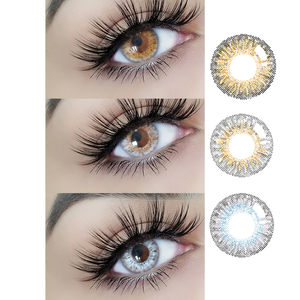
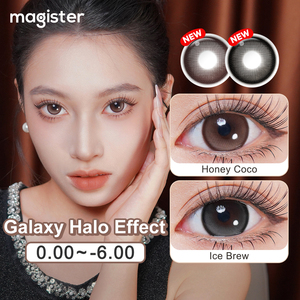
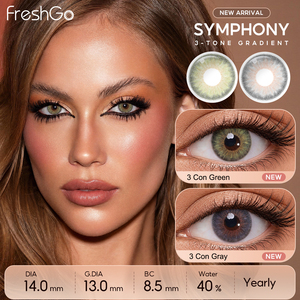
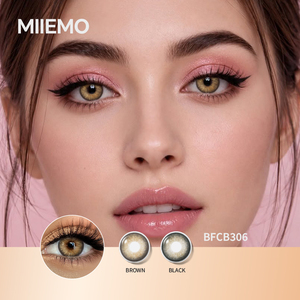
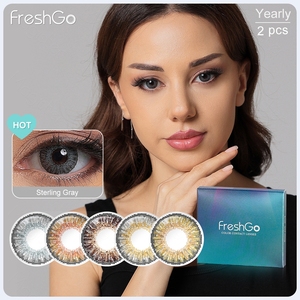
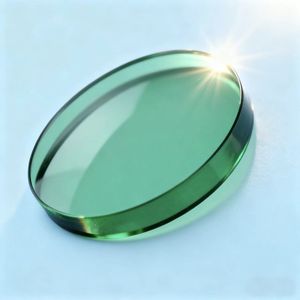
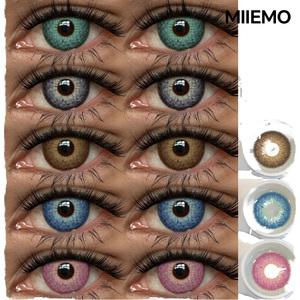
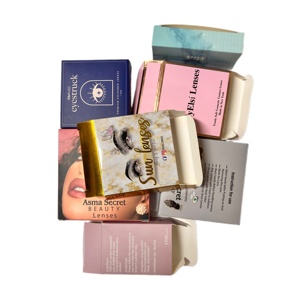
China's Ecosystem for OEM & Private Label Contact Lens Export
Understanding the technological maturation, automated manufacturing scale, and quality governance driving global supply chains.
Over the past decade, global procurement strategies for cosmetic and prescription soft contact lenses have undergone a structural paradigm shift. Historically centered around traditional optical hubs in Europe and East Asia, international buyers—ranging from regional retail chains and cosmetic brand conglomerates to specialized e-commerce platforms—are increasingly consolidating their manufacturing footprint in China. As a premier exporter and manufacturer, China has transitioned from high-volume OEM assembly to advanced high-precision casting, polymer material innovation, and bio-compatible printing technologies.
As medical-grade Class III devices under regulatory oversight globally (including China’s National Medical Products Administration - NMPA, formerly CFDA), contact lenses require stringent cleanliness and compliance metrics. Exporters operating out of China's primary optical hubs have established ISO 13485-certified Class 100,000 cleanrooms equipped with fully integrated automated cast-molding machinery. This infrastructure enables simultaneous mass production of daily disposable, monthly, and yearly replacement lenses in both plano (non-prescription) cosmetic configurations and wide-range myopia power corrections.
Next-Generation Sourcing Strategies (2025–2030)
Key technological, material, and regulatory shifts shaping international B2B contact lens buyer demands.
1. Silicone Hydrogel Dominance
Procurement is rapidly shifting from classic HEMA materials to Silicone Hydrogel ($Dk/t > 80$). Silicone hydrogel facilitates significantly higher corneal oxygenation, dramatically extending comfortable daily wear time and satisfying medical safety demands across Tier-1 markets.
2. Sandwich Micro-Encapsulation
To eliminate ocular irritation, modern importers demand 3-layer sandwich color embedding technology. Bio-compatible pigments are locked seamlessly between two clear polymer layers, guaranteeing zero direct dye-to-cornea contact and preserving color clarity.
3. Hyper-Personalized OEM Packaging
B2B buyers are moving away from standardized blister boxes. Custom packaging—including localized multi-lingual secondary boxes, serialized anti-counterfeiting QR codes, and sustainable biodegradable packaging materials—is now a core contract requirement.
4. Hybrid Vision & Cosmetic Optics
Cosmetic lenses are no longer restricted to flat zero-power fashion applications. Exporters must offer comprehensive optical portfolios integrating toric (astigmatism) power ranges, high-diopter myopia correction, and UV-blocking functional filters within colored designs.
5. Ultra-Fast SKU Iteration
Driven by social media trends (TikTok, Instagram), fashion cycles require rapid design prototyping. Top Chinese suppliers maintain agile ODM sampling workflows, taking new color pattern concepts to finished prototype samples in under 14 days.
6. Strict Regulatory Transparency
Global customs compliance is becoming increasingly stringent. Exporters must provide full Technical Documentation Files (TDF), cleanroom environmental monitoring reports, and full batch traceability from raw monomer synthesis to sealed sterile blister packs.
Material Science & Optical Specification Comparison
Comparing structural properties across core contact lens hydrogel categories manufactured for B2B export.
| Material Parameter | Standard Hydrogel (HEMA) | High-Water Hydrogel | Silicone Hydrogel (SiHy) | Specialty Cosmetic Hybrid |
|---|---|---|---|---|
| Water Content (%) | 38% – 42% | 55% – 58% | 40% – 48% | 38% – 45% |
| Oxygen Permeability ($Dk/t$) | 18 – 25 $10^{-9}$ | 28 – 35 $10^{-9}$ | 80 – 130 $10^{-9}$ | 25 – 45 $10^{-9}$ |
| Modulus (Elasticity) | 0.3 – 0.4 MPa (Soft) | 0.25 – 0.35 MPa (Ultra-Soft) | 0.5 – 0.8 MPa (Structural) | 0.35 – 0.5 MPa (Balanced) |
| Color Printing Layer | Surface / Semi-Embedded | Embedded Layer | 3-Layer Sandwich Encapsulated | 3-Layer Sandwich Encapsulated |
| Recommended Wear Cycle | Monthly / Yearly | Daily Disposable | Extended Wear / Daily / Monthly | Daily / Yearly / Cosplay |
| Target B2B Segment | Budget Mass Retail | E-Commerce & Pharmacy | Premium Optical Chains | Fashion & Beauty Brands |
Integrated Manufacturing Capabilities & Export Scale
Combining automated production, rigorous cleanroom standards, and end-to-end supply chain reliability.
At the forefront of China's contact lens manufacturing sector, Mylensora Technology Co., Ltd. exemplifies the modern integrated model—unifying specialized optical design, polymer R&D, automated cast-molding manufacturing, brand packaging, and international export logistics under a centralized management architecture.
To eliminate quality bottlenecks common in fragmented supply chains, Mylensora has invested heavily in state-of-the-art infrastructure. With Phase I completed at a robust annual output capacity exceeding 120 million lenses, and Phase II under active expansion, the facility is positioned to become one of the largest consolidated contact lens production hubs in Asia. This monumental scale provides B2B partners with unprecedented supply continuity, cost efficiency, and buffer capacity for peak seasonal demand surges.
In-House R&D & Tooling
Complete control over mold design and lathe-cut inserts. Our optical engineers develop customized base curves (8.5mm - 8.7mm) and edge profiles tailored to target ethnic facial and ocular anatomies worldwide.
Cost-Efficiency at Scale
Fully automated monomer dosing, high-speed centrifugal casting, and robotic packaging lines minimize manual intervention, driving down unit cost while maintaining flawless batch-to-batch parameter consistency.
Global Exhibition Footprint
Actively participating in landmark optics conventions worldwide—including MIDO (Milan), HKTDC Hong Kong International Optical Fair, and Dubai Vision Plus Expo—keeping our private label partners ahead of market trends.
OEM & ODM Customization Roadmap
A disciplined 6-stage operational pipeline engineered to turn concept sketches into certified retail products.
Brief & Spec
Defining target wear schedule, color shade count, prescription range, and regulatory market requirements.
Color Sampling
Formulating pigment layers and generating physical lens samples for client approval within 10-14 business days.
Packaging Artwork
Customizing blister foil printing, inner instruction leaflets, and branded primary box packaging graphics.
Cast Molding
Automated monomer polymerization, precision pad-printing, and high-temperature hydration swelling.
100% Optical Quality Control
Automated visual inspection (AOI) verifying lens diameter, power accuracy, edge integrity, and color registration.
Autoclave & Dispatch
High-pressure steam sterilization in blister packs, followed by batch laboratory microbial clearance and global shipping.
Frequently Asked Questions by Global Buyers
Addressing critical commercial, technical, and regulatory inquiries for wholesale and OEM partners.
Is China a reliable sourcing origin for medical-grade contact lenses? +
What is the typical Minimum Order Quantity (MOQ) for custom private label orders? +
How do you guarantee color consistency across large manufacturing batches? +
Can you manufacture colored contact lenses with prescription powers (myopia/astigmatism)? +
What is the difference between HEMA hydrogel and Silicone Hydrogel lenses in procurement planning? +
How is packaging customized for international local market compliance? +
What is the production lead time for OEM orders from artwork approval to shipment? +
How do you ensure lens sterility and shelf-life integrity during long-distance oceanic export? +
Partner with China's Premier Contact Lens Exporter
Elevate your optical brand with factory-direct pricing, certified quality management, and dedicated OEM/ODM support.