Featured Green & Colored Contact Lens Collections
Explore our export-grade medical contact lenses engineered with cast-molding precision, superior oxygen transmissibility (Dk/t), and multi-tone iris simulation pigments.
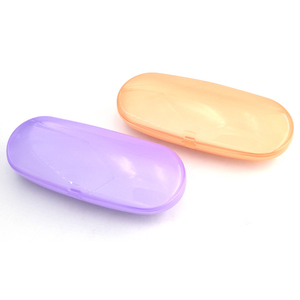
Hot Selling Designs Color Lens Soft Customized Logo Contact Lenses
Poly-HEMA material engineered for vibrant pigmentation and ultra-soft, all-day wearing comfort.
View Details →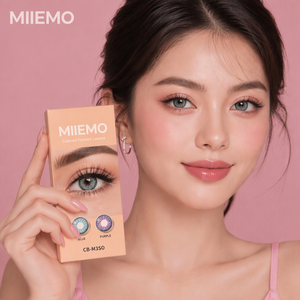
DSC Prescription Comfortable Soft Three Tone Color 14.5mm Natural Enlargement Lens
14.5mm natural eye-enlarging diameter featuring 3-tone micro-dot matrix printing.
View Details →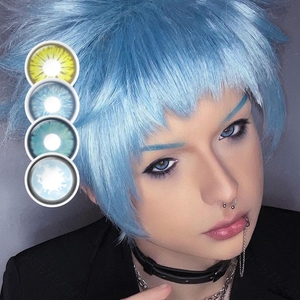
Chainsaw Man Halloween Cosplay Soft Lens Hollywood Eye Effect
High-opacity color blocking specifically designed for theatrical and anime cosplay transformations.
View Details →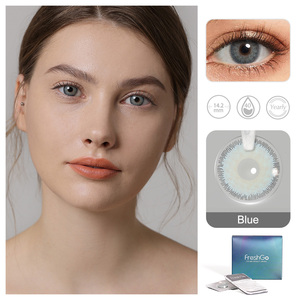
Freshgo Wholesale Prescription Yearly Coloured Natural Power Lenses
Long-lasting structural durability with myopia power options ranging from -0.50D to -8.00D.
View Details →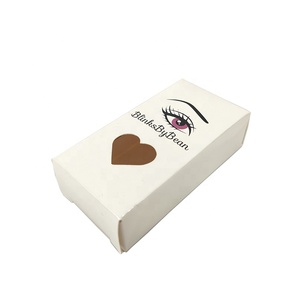
Custom Natural Color Contact Lenses Box Packaging (Glossy/Matte)
Tailor-made brand packaging solutions, including blister foils, UV varnishing, and custom boxes.
View Details →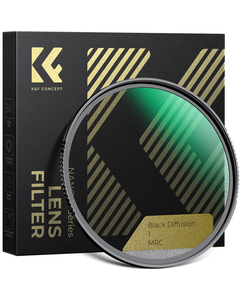
K&F Concept Black Pro-Mist Cinematic Special Effects Optics Filter
Precision optical glass diffusion filter designed for professional photography and broadcast clarity.
View Details →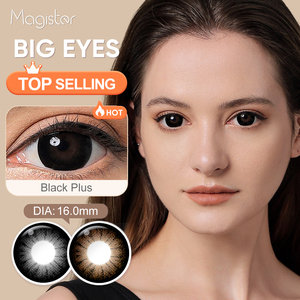
Magister 16mm Natural Colored Soft Contact Lenses Wholesale
Dramatic eye-opening 16mm diameter with multi-layered hazel and green pigmentation rings.
View Details →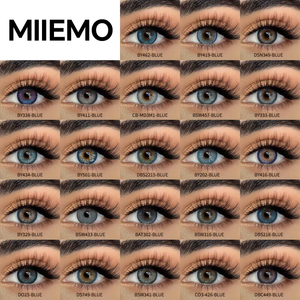
OEM Three Tone Colored Contact Lenses with Custom Blister Packaging
Full Turnkey OEM solution including custom bio-compatible shade matching and blister sealing.
View Details →Why Partner with Mylensora Technology Co., Ltd.
As a vertically integrated contact lens manufacturer, Mylensora controls the entire ecosystem—from hydrogel monomer synthesis and automated cast-molding to micro-encapsulation color printing and aseptic packaging.
In-House R&D & Monomer Synthesis
Our material research laboratory develops proprietary hydrogel and silicone-hydrogel polymer formulations. By balancing water retention (38%-58%) with high oxygen permeability, we deliver medical-grade lenses that resist tear film protein deposits.
Sandwich Printing Micro-Encapsulation
Safety is non-negotiable. Our 3-layer micro-sandwich printing technology completely isolates organic pigments between two biocompatible lens layers. Colors never directly touch the cornea, preventing irritation and preserving optical clarity.
Class 100,000 Cleanroom & ISO Standards
All automated manufacturing, hydrated buffer washing, optical laser defect inspection, and blister sealing take place inside medical-grade Class 100,000 cleanrooms in strict compliance with ISO 13485 and NMPA Class III standards.
Low MOQ & Fast Prototype Lead Times
We empower independent optical brands and e-commerce startups with low minimum order quantities (MOQ). Test new green tone collections, custom private label packaging, or prescription power matrices without heavy capital tied up in stock.
Global Regulatory Documentation Support
Expanding internationally requires streamlined customs clearing and health authority filings. We provide full technical dossiers, Certificates of Free Sale (CFS), CE declarations, test reports, and ISO 13485 documentation for global markets.
Exhibition Proven Leadership
Regularly featured at world-class optical trade shows including MIDO Milan, HKTDC Hong Kong International Optical Fair, and Dubai Vision Plus Expo—building long-term trust with optical buyers across 80+ countries.
Industry Technical Whitepaper: Analysis of Green Colored Contact Lens Manufacturing & Procurement Trends
Cosmetic contact lenses have transitioned from niche aesthetic novelties into high-growth ocular medical devices within global beauty and ophthalmic markets. Among all tint variations, green colored contact lenses—ranging from subtle Jade and Olive to dramatic Emerald, Forest Green, and Hazel-Green—represent one of the most commercially profitable yet technically challenging color categories to manufacture. Achieving vibrant pigment payoff on naturally dark brown or black irises (common across Asian, Middle Eastern, Latin American, and African demographics) while maintaining continuous oxygen permeability, corneal hydration, and zero pigment leaching requires high-precision optical engineering.
This comprehensive technical whitepaper details the structural physics, polymer chemistry, pigment encapsulation technologies, global regulatory requirements, and future market sourcing dynamics governing green cosmetic contact lenses. Designed for optical brand owners, pharmaceutical buyers, regional distributors, and e-commerce chain procurement directors, this report delivers actionable information gain to guide supplier evaluation and private-label brand development.
1. Material Science & Optical Physics in Green Pigment Reproduction
1.1 The Subtractive & Additive Iris Overlay Dilemma
Unlike clear prescription hydrogel lenses, a colored contact lens operates as an optical filter positioned directly over the human cornea and crystalline lens. Human irises contain varying levels of eumelanin and pheomelanin. When light reflects off a dark brown iris (high eumelanin concentration), absorbing dark wavelengths can mute applied green pigments, causing them to appear muddy or brownish-grey.
To overcome dark iris absorption, top-tier manufacturers utilize a multi-tone layer architecture:
- Opaque Base Ring (White/Light Cream Underlay): A microscopic 0.002mm titanium dioxide ($TiO_2$) or high-purity inorganic matrix layer acts as an optical reflector, blocking background melanin absorption.
- Primary Green Pigment Matrix (Emerald, Olive, or Mint): Formulated with biocompatible organic and inorganic colorants such as Chromium Oxide Greens ($Cr_2O_3$) and Copper Phthalocyanine Green ($C_{32}HCl_{15}CuN_8$), applied via high-resolution dot-matrix printing.
- Limbal & Pupil Translucent Halos: A feathered radial limbal ring creates natural iris depth, while a micro-graduated inner ring around the pupil opening ensures smooth color blending without restricting the wearer's natural pupillary light reflex.
1.2 Micro-Encapsulation "Sandwich" Technology vs. Surface Printing
Historically, low-cost contact lens suppliers applied color pigments via direct pad printing onto the hydrogel surface. This legacy approach created direct pigment-corneal contact, increasing surface roughness, friction against the palpebral conjunctiva, protein buildup, and risk of pigment leaching over prolonged wear.
Mylensora Technology Co., Ltd. enforces the strict Sandwich Micro-Encapsulation Method across 100% of colored lens production. Under automated cast-molding:
- A clear monomer layer is deposited into the female optical mold and semi-cured.
- The multi-tone green pigment design is precisely pad-printed or digital inkjet-printed onto the semi-cured polymer surface.
- A second layer of hydrogel/silicone-hydrogel monomer is injected into the male mold, fully enveloping and locking the color matrix inside an impermeable, smooth polymer cocoon.
- Full UV thermal polymerization permanently bonds the structure.
The resulting lens features a 100% smooth outer surface with zero exposed pigment particles, maintaining a low friction coefficient ($\mu < 0.05$) and preserving corneal epithelial integrity.
| Parameter | Standard Hydrogel (Poly-HEMA) | Silicone Hydrogel (SiHy) | Cosplay /SFX High-Opacity Lenses |
|---|---|---|---|
| Water Content (%) | 38% - 55% | 40% - 48% | 38% - 42% |
| Oxygen Transmissibility ($Dk/t$) | 15 - 25 $Dk/t$ | 80 - 120 $Dk/t$ | 12 - 20 $Dk/t$ |
| Base Curve (BC) | 8.5mm - 8.7mm | 8.6mm - 8.8mm | 8.6mm |
| Diameter (DIA) | 14.0mm - 14.2mm | 14.2mm - 14.5mm | 14.5mm - 16.0mm |
| Modulus (Elasticity) | 0.3 - 0.5 MPa | 0.6 - 0.9 MPa | 0.4 - 0.6 MPa |
| Recommended Replacement | Daily / Monthly / Yearly | Daily / Monthly | Daily / Yearly |
2. Product Development Trends: The Future of Green Contact Lenses
The global color contact lens industry is experiencing a massive transformation driven by material science innovations, changing consumer aesthetics, and expanding medical prescription integration. Importers and brand owners must align their product portfolios with four major development trends:
2.1 Transition to High Oxygen Permeability Silicone Hydrogel (SiHy)
While traditional Poly-HEMA hydrogel lenses remain cost-effective, consumer awareness regarding ocular hypoxia, end-of-day dryness, and corneal vascularization has accelerated demand for Silicone Hydrogel green contact lenses. Silicone polymer chains form siloxane matrix channels that transport oxygen directly through the material independent of water content. By offering SiHy green lenses with $Dk/t$ values exceeding 80, brands can target sensitive-eye wearers and support extended 12+ hour daily wear schedules.
2.2 AI-Assisted Biomimetic Iris Patterning
Consumers no longer accept artificial, flat color rings. The modern standard demands biomimetic naturalism. Advanced manufacturers employ AI image processing to scan thousands of natural human irises, analyzing subtle crypts, furrows, contraction folds, and pigment freckles. These patterns are algorithmically translated into multi-frequency dot-matrix printing layouts. A 3-tone green lens now combines an olive inner ring, emerald mid-tone radial spokes, and a soft charcoal limbal border to seamlessly mimic real eye anatomy.
2.3 Dual-Function Prescription Myopia + Astigmatism Integration
Cosmetic lenses are no longer restricted to plano (0.00 power) fashion users. Over 65% of global green contact lens wearers require vision correction. Sourcing green colored lenses in full power ranges (from -0.50D to -10.00D in 0.25D step increments) is mandatory for optical store distribution. Advanced factories are also introducing toric silicone hydrogel colored lenses to correct astigmatism without sacrificing shade consistency.
2.4 Wetting Agent Polymeric Matrices (HA & Trehalose Infusion)
To combat dry eye symptoms caused by air conditioning, prolonged screen exposure, and ambient pollution, next-generation green hydrogel lenses integrate internal wetting agents such as Hyaluronic Acid (HA) and Trehalose directly into the hydration wash buffer. These biocompatible humectants lock water molecules onto the lens surface, maintaining tear film breakdown time (TBUT) above 10 seconds throughout the day.
3. Future Procurement Trends & Supply Chain Dynamics for B2B Importers
Navigating global contact lens procurement requires a clear understanding of shifting channel dynamics, regulatory scrutiny, and packaging customization requirements. B2B buyers should evaluate the following strategic shifts:
3.1 Surge in Daily Disposable Segment vs. Yearly Lenses
Market data shows a rapid shift toward daily disposable colored contact lenses, particularly in North America, Western Europe, and Tier-1 Asian markets. Daily disposables eliminate lens case care, disinfectant solution maintenance, and compliance risks associated with protein degradation over 12 months. B2B importers are reallocating supply chains toward 10-pack and 30-pack daily blister boxes, which drive higher recurring lifetime value (LTV) per consumer.
3.2 Sustainable & Tamper-Evident Blister Packaging
Environmental packaging mandates in the EU and North America are forcing a redesign of traditional foil blisters. Leading factories are adopting recyclable Polypropylene (PP) blister cups, reduced-aluminum peelable foil lids, and FSC-certified soy-ink outer paperboard packaging. Furthermore, medical packaging must maintain 100% sterile seal integrity under high-pressure steam autoclave sterilization at 121°C ($250^\circ F$).
3.3 Agile OEM/ODM Customization with Micro-MOQ Prototyping
The era of requiring 100,000 units per shade for private label production is over. Modern optical brands require rapid-iteration trial launches. Direct manufacturers like Mylensora offer low MOQ entry barriers (e.g., 3,000 to 5,000 pairs per color design) paired with full OEM turn-key support: custom shade development, barcode registration, artwork printing, and multi-language compliant labeling.
4. Quality Assurance, Regulatory Compliance & Factory Evaluation Criteria
Because contact lenses are classified as Class IIb (EU CE) or Class III (China NMPA / US FDA) medical devices, selecting a manufacturer demands rigorous duediligence beyond product aesthetics. B2B buyers should insist on verifying four core technical benchmarks:
4.1 Spectrophotometric Color Consistency & Batch-to-Batch Stability
A common failure in cheap OEM manufacturing is color variance between production batches. Premium factories employ spectrophotometers and computerized color matching systems under D65 standard illuminant conditions. This guarantees that an "Emerald Green" produced in Batch A matches Batch B with a color difference delta $ \Delta E < 0.8 $.
4.2 Laser-Guided Edge Profile Smoothness Inspection
Lens edge design dictates physical wearing comfort. A thick or irregular knife-edge scrapes against the corneal limbus during blinking, causing tearing and foreign body sensation. Advanced automated production lines use high-speed optical laser sensors to measure edge curvature radius ($r_e$) and bevel symmetry on 100% of manufactured units.
4.3 Cytotoxicity, Ocular Irritation & Sterility Testing
Every lot must undergo mandatory ISO 10993 biological evaluation of medical devices, including:
- In vitro Cytotoxicity Testing (ISO 10993-5): Verifying zero cell lysis in L929 mouse fibroblast cultures.
- Ocular Irritation & Sensitization (ISO 10993-10): Confirming zero inflammatory response on ocular tissue.
- Bioburden & Sterility Assurance (ISO 11137 / EN 556): Achieving a Sterility Assurance Level (SAL) of $10^{-6}$ via validated terminal steam autoclaving.
Frequently Asked Questions for Sourcing Green Contact Lenses
Get immediate, expert answers regarding production parameters, OEM private labeling, regulatory certification, and shipping protocols.
Is Mylensora a direct manufacturer or a trading export intermediary? +
How does your factory ensure green pigments do not touch the human eye? +
What is the Minimum Order Quantity (MOQ) for custom OEM private label green contact lenses? +
Which medical regulatory certifications cover your production facilities? +
Can green colored contact lenses effectively cover dark brown or black eyes? +
Do you produce prescription green contact lenses for myopia correction? +
What is the standard production lead time for bulk wholesale and custom OEM orders? +
Can we request physical pre-production green lens samples prior to placing a bulk order? +
Ready to Launch or Expand Your Green Contact Lens Brand?
Partner directly with a certified Chinese contact lens manufacturer. Gain competitive pricing, medical-grade quality assurance, and end-to-end private label support today.