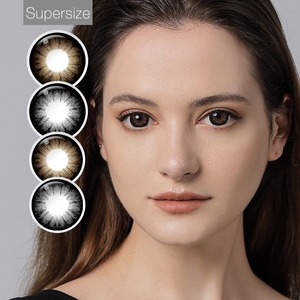
14.2mm Colored Contact Lenses: The Golden Ratio of Global Cosmetic Contact Lens Manufacturing
In the highly regulated, design-driven landscape of cosmetic optometry, the 14.2mm overall diameter (DIA) has established itself as the absolute industry benchmark for natural iris enhancement across Western, Middle Eastern, and Asian markets alike. Unlike extreme enlarge-effect lenses (14.5mm to 15.0mm) or subtle natural-fit lenses (13.8mm to 14.0mm), a precision-engineered 14.2mm lens offers the optimal balance between visual transformation, limbal ring coverage, and physiological tear flow dynamics.
For procurement officers, brand owners, and medical device distributors, sourcing from a vetted 14.2mm colored contact lenses factory requires evaluating technical metrics that extend far beyond aesthetic dot-matrix patterns. Oxygen transmissibility (Dk/t), base curve consistency (typically BC 8.5mm to 8.6mm), edge profile smoothness, and bio-compatible pigment encapsulation are paramount to ensuring patient comfort, compliance, and long-term brand loyalty.
Anatomical Precision & Optical Performance
The human cornea averages approximately 11.5mm to 12.0mm in horizontal diameter. A 14.2mm soft contact lens yields a graphic diameter (G.DIA) ranging between 13.0mm and 13.6mm, allowing the lens to extend gracefully beyond the natural limbus without obstructing the scleral vascular network. This structural alignment guarantees that:
- Corneal Respiration is Uninhibited: Adequate peripheral clearance allows continuous tear exchange under the lens matrix during ambient blinking.
- Pupillary Optical Zone Clarity: Standard 14.2mm OEM configurations feature an unobstructed central clear zone of 3.5mm to 4.5mm, preventing tunnel vision or color-halo artifacts in low-light conditions.
- Centered Stability: Mathematical balance between the 8.6mm base curve and 14.2mm total diameter keeps the lens centered over the optical axis, avoiding unwanted decentration during rapid saccadic eye movements.
Mylensora Technology: Enterprise OEM/ODM Advantages & Manufacturing Infrastructure
As a leading Chinese contact lens manufacturer integrating original research & development, graphic pattern design, cleanroom production, regulatory registration, and international fulfillment, Mylensora Technology Co., Ltd represents the vanguard of modern medical-grade contact lens production.
Operating under strict Quality Management Systems aligned with ISO 13485 standards and medical device clearance from the NMPA (formerly CFDA), Mylensora provides wholesale partners with an unassailable competitive advantage in production consistency, regulatory safety, and speed-to-market.
Automated Cast-Molding Lines
Utilizing high-precision digital mold tooling, Phase I achieves 120 million lenses annually with automated optical vision system (AOI) parameter checking for zero-defect edge finishing.
Sandwich Pigment Technology
Color pigments are cross-linked strictly within the interior hydrogel matrix, guaranteeing that dyes never make direct contact with corneal tissue or eyelid conjunctiva.
Full Dossier & Global Compliance
Complete technical documentation (CE, ISO, NMPA) supporting international distributors with local health authority registrations and fast-track customs clearance.
Turnkey Private Label Packaging
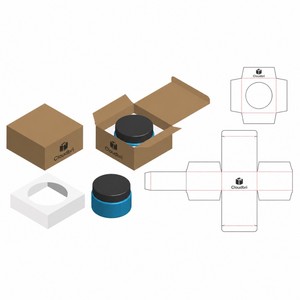
Custom glass vial, aluminum foil blister, and box packaging options with specialized branding, artwork translation, security anti-counterfeiting codes, and barcode integration.
From attending prestigious global optical trade fairs—including MIDO Milan, HKTDC Hong Kong International Optical Fair, and Dubai Vision Plus Expo—Mylensora continuously assimilates market intelligence to keep OEM clients ahead of regional color trends and regulatory changes.
Future Procurement & Material Development Trends (2025–2030)
The global colored contact lens market is undergoing a structural transition toward health-conscious, high-performance materials and ecologically sustainable manufacturing processes. Sourcing managers must realign their supply chain criteria to encompass these key emerging trends:
1. Shift Toward Silicone Hydrogel (SiHy) in Cosmetic Lenses
Traditionally, cosmetic colored contacts relied on conventional HEMA-based hydrogel materials with Dk values ranging between 8.5 and 15. The modern consumer, however, demands longer daily wear schedules (12+ hours) without experiencing end-of-day dryness or corneal hypoxia. Third-generation Silicone Hydrogel formulations boost oxygen transmissibility (Dk/t > 50), allowing up to five times more oxygen to reach the cornea. Factories capable of co-extruding pigment layers within SiHy matrices are positioned to capture high-margin optical retail channels.
2. Dominance of Daily Disposables over Annual Lenses
While yearly and 6-month replacement lenses maintain strong market share in budget-conscious regions and specialized cosplay sectors, premium markets are rapidly shifting toward 1-day daily disposables. Daily replacement completely eliminates lipid/protein deposit accumulation, simplifies consumer care routines, and drastically reduces the incidence of microbial keratitis. OEM buyers are increasingly ordering 10-pack and 30-pack daily blister configurations with automated high-speed packaging.
3. Hyper-Realistic Iris Patterning & 3D Layering
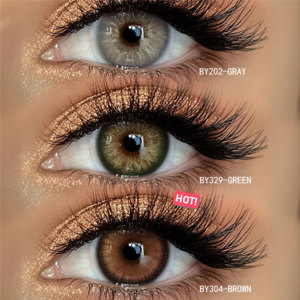
Flat, single-tone color prints have been replaced by multi-tonal, biomimetic iris designs. Modern 14.2mm factory production utilizes three-tone and four-tone micro-dot printing, incorporating realistic limbal rings, radial stroma fibers, and warm pupillary transition zones. This provides dark-eyed users with high-opacity coverage while preserving a natural visual depth under bright daylight.
| Technical Spec Parameter |
Standard Hydrogel (PolyHEMA) |
Advanced Silicone Hydrogel (SiHy) |
Strategic OEM Advantage |
| Oxygen Permeability (Dk/t) |
10 – 25 Dk/t |
50 – 120 Dk/t |
SiHy supports extended daily wear health claims |
| Water Content |
38% – 58% |
33% – 45% |
Lower water SiHy resists dehydration in low humidity |
| Modulus / Stiffness |
0.3 – 0.5 MPa (Soft) |
0.6 – 1.0 MPa (Resilient) |
SiHy offers easier insertion for novice wearers |
| Primary Market Fit |
Cost-sensitive mass retail / Cosplay |
Premium Optical / Dermatological Brands |
Dual-material factory lines maximize target reach |
| Pigment Encapsulation |
Dual-Layer Surface Lock |
Inter-Matrix Polymerization |
Guarantees complete ocular safety & color fastness |
Sourcing Directors' Matrix: Evaluating Top 10 14.2mm Contact Lens Suppliers
When curating a top 10 supplier portfolio for custom 14.2mm color contacts, procurement directors should assess factories against a rigorous qualification matrix:
- Regulatory Credentials: Does the supplier hold active Class III Medical Device certificates (NMPA, CE, US FDA, or equivalent) with full traceability for raw monomer batches?
- Color Spectrum Consistency: Does the factory utilize spectrophotometer color matching to ensure that Batch A and Batch B remain 100% identical in shade pay-off?
- Parameter Tolerances: Is the base curve (BC) maintained within a ±0.05mm tolerance, and total diameter (DIA) within ±0.1mm?
- MOQ & Packaging Flexibility: Can the manufacturer support low initial trial runs (e.g., 500–1,000 pairs per color/power) while offering scalable pricing for 100,000+ unit repeat orders?
- Prescription Power Range: Does the factory stock wide power spectrums (Plano 0.00 to -10.00D in 0.25D/0.50D increments) for immediate prescription order fulfillment?
Send an Inquiry