High-Demand Wholesale Enlarging Contact Lenses
Engineered for vivid eye enlargement, natural limbal ring definition, and superior ocular hydration. Available for private label customization and bulk supply.
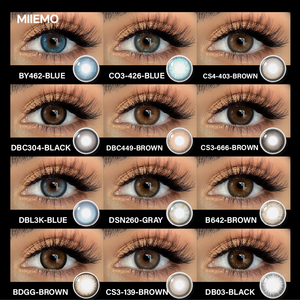
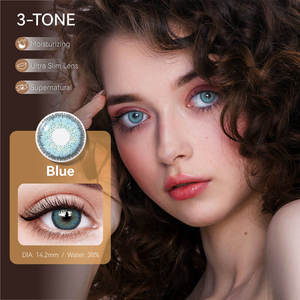
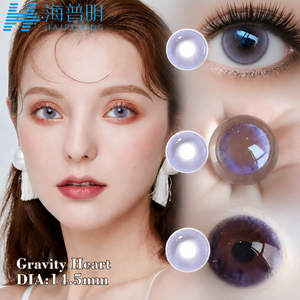

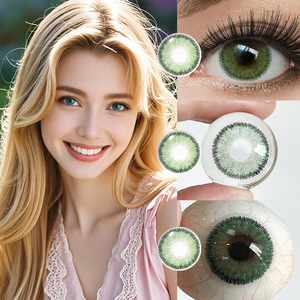
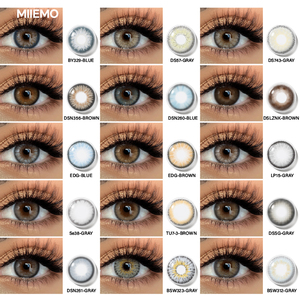
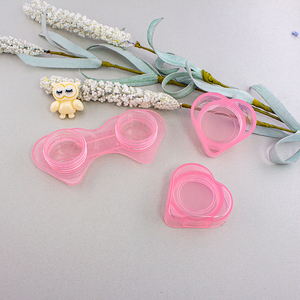
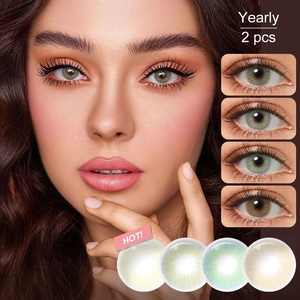
B2B Sourcing Guide & Technical Whitepaper: OEM/ODM Enlarging Contact Lenses
In the rapidly evolving global cosmetic optometry market, OEM/ODM enlarging contact lenses (commonly referred to as circle lenses or limbal ring enhancement lenses) represent one of the highest-margin and fastest-growing product categories. Originally popularized in East Asia, the consumer appetite for enlargement lenses has transformed into a worldwide beauty phenomenon. Today's international buyers—ranging from retail chain optical stores and ecommerce private label brands to regional pharmaceutical distributors—demand far more than visual tone altering; they mandate anatomical precision, physiological safety, optical acuity, and seamless brand customization.
As a direct, fully integrated contact lens manufacturer, Mylensora Technology Co., Ltd. produces top-tier hydrogel and silicone hydrogel contact lenses. This comprehensive whitepaper serves as an authoritative technical procurement guide for optical procurement officers, brand owners, and supply chain executives seeking to partner with certified OEM/ODM manufacturers.
Anatomy & Optics of Enlarging Contact Lenses: Graphic Diameter vs. Overall Diameter
The fundamental optical mechanism behind eye-enlarging lenses relies on manipulating the outer limbal ring—the dark circle where the iris meets the sclera. To engineer effective enlarging contact lenses, OEM/ODM manufacturers must balance two crucial dimensional parameters:
- Overall Diameter (DIA): The total physical width of the soft lens (typically ranging from 14.0mm to 14.5mm). DIA determines mechanical stability, centration on the cornea, and tear exchange under the lens.
- Graphic Diameter (GDIA): The actual pigmented print area width (ranging from 13.0mm to 14.0mm). GDIA directly controls the visual enlargement effect. A standard natural iris measures approximately 11.5mm–12.0mm. An engineered GDIA of 13.5mm to 13.8mm creates an immediate, illusionary iris enlargement without overlapping onto the sclera in an unnatural manner.
- Base Curve (BC): Typically calibrated to 8.5mm–8.6mm to provide optimal sagittal depth, ensuring the lens centers perfectly so the enlargement pattern remains symmetrically aligned over the wearer's pupil.
Sandwich Micro-Encapsulation
Color pigments are locked between two isolated biocompatible hydrogel layers, preventing direct color contact with corneal epithelial cells.
Cast-Molding Consistency
Fully automated double-sided cast molding guarantees micron-level geometric parameter replication across millions of units.
High Oxygen Flow ($Dk/t$)
Advanced HEMA-GMA and Silicone Hydrogel matrix chemistry maintains high transmissibility to keep eyes bright, white, and healthy.
Triple-Layer Sandwich Color Technology: Biocompatibility First
Inferior, low-cost cosmetic contact lenses often rely on single-layer surface printing, where raw colorants remain exposed to the palpebral conjunctiva and tear film. This outdated approach risks pigment leeching, micro-abrasions, and severe allergic keratitis.
Mylensora's state-of-the-art OEM/ODM production lines strictly utilize Triple-Layer Sandwich Micro-Encapsulation Technology. Under this protocol, organic non-toxic iron oxide micro-pigments are deposited precisely onto a primary polymer base layer. A secondary protective polymer coating is then cured over the color layout, effectively embedding the artwork inside an inert hydrogel matrix. The outer surfaces remain silky smooth, preserving natural tear film breakup time (TBUT) and upholding medical-grade safety standards.
Future Procurement Trends in Enlarging Contact Lenses
Strategic roadmap for optical brand owners planning their next-generation product lines.
1. Rapid Shift Toward Daily Disposables
While yearly replacement lenses remain cost-effective in regional markets, high-margin retail growth is heavily transitioning toward Daily Disposable Enlarging Lenses. Global consumers increasingly prioritize sterility, convenience, and zero maintenance. OEM brands expanding their daily disposable lineup benefit from substantially higher repeat purchase rates and customer lifetime value (LTV).
2. Silicone Hydrogel Material Dominance
Next-generation circle lenses are moving from traditional HEMA to Silicone Hydrogel polymer blends. Achieving oxygen transmissibility ($Dk/t$) ratings above 80–100 while incorporating limbal ring dots allows wearers to enjoy 12+ hours of comfortable wear without corneal hypoxia or redness.
3. Complex Optical Correction Matrix
Modern cosmetic wearers refuse to choose between aesthetics and vision correction. Sourcing demand has surged for OEM enlarging contact lenses with full prescription ranges (0.00 to -10.00 Diopters), astigmatism power options (Toric enlarging lenses), and customized center-distance multifocal profiles.
4. Hyper-Natural "Ring & Gradient" Aesthetic Patterns
Heavy solid limbal rings are being replaced by micro-dot matrix gradients. OEM design trends prioritize multi-tonal transitions (e.g., 3-tone hazel, olive, and warm grey) that seamlessly blend with natural iris fibers, giving an enlarged look that appears entirely authentic even at close range.
B2B Product Specification & Selection Matrix
Use this standard manufacturing reference table when specifying custom OEM/ODM parameters for bulk purchase orders or private label development projects.
| Parameter Category | Standard HEMA Series | Premium Silicone Hydrogel Series | OEM/ODM Customization Capability |
|---|---|---|---|
| Overall Diameter (DIA) | 14.0mm – 14.5mm (±0.1mm) | 14.2mm – 14.5mm (±0.1mm) | Custom lathe molding from 13.8mm to 14.8mm |
| Graphic Diameter (GDIA) | 13.2mm – 13.8mm | 13.4mm – 14.0mm | Fully custom dot-matrix graphic print templates |
| Base Curve (BC) | 8.5mm / 8.6mm | 8.6mm / 8.7mm | Tailored radius curves upon bulk specification |
| Water Content | 38% – 42% | 45% – 55% | Formulated for optimal hydration/dehydration ratio |
| Oxygen Transmissibility ($Dk/t$) | 15 – 25 $Dk/t$ | 80 – 120 $Dk/t$ | Material chemistry optimized for targeted wear modal |
| Prescription Range | 0.00D to -10.00D (0.25D/0.50D steps) | 0.00D to -12.00D / Toric / Multifocal | Custom power matrices & mixed-power packaging |
| Replacement Schedule | Monthly / Yearly | Daily / Monthly | Sterile Blister Packaging or Glass Vial Format |
Why Partner with Mylensora Technology?
Integrating design, R&D, high-speed automated production, and world-class quality assurance under one roof.
Direct Factory Scale
With Phase I delivering over 120 million lenses annually and Phase II expansion actively progressing, Mylensora is establishing one of the largest contact lens manufacturing bases in Asia. Bypass intermediaries and secure true factory-direct pricing.
Strict NMPA & Medical Certifications
Our facilities operate in strict accordance with Medical Device GMP standards inside Class 100,000 cleanrooms. Certified under NMPA (formerly CFDA) and international quality frameworks, ensuring full regulatory clearance for global market entry.
End-to-End Private Label Solutions
From co-developing custom color patterns and graphic diameters to manufacturing bespoke blister foil lids, outer folding boxes, and user leaflets, our OEM/ODM design team turns your brand concept into market-ready retail products.
Low MOQ & Agile Supply Chain
We support emerging optical startup brands with flexible minimum order quantities (MOQ), while offering large-scale inventory buffer programs for established global wholesale distributors requiring rapid dispatch.
Proven International Presence
A trusted global supplier actively exhibiting at major international optical tradeshows, including MIDO Eyewear Show (Milan), HKTDC Hong Kong International Optical Fair, and Dubai Vision Plus Expo.
Full Technical & Dossier Support
We supply qualified business partners with complete physical parameter testing, biocompatibility analysis, stability reports, and registration dossiers to streamline your regional medical authority approvals.
Frequently Asked Questions by OEM/ODM Buyers
Answers to common business, regulatory, and production questions from wholesale distributors and private label brand owners.
Is Mylensora Technology a direct manufacturer or a trading agent? +
What is the typical Minimum Order Quantity (MOQ) for custom OEM/ODM projects? +
How do you guarantee pigment safety in eye-enlarging contact lenses? +
Can we request custom Graphic Diameters (GDIA) and custom color patterns? +
Which certifications and regulatory documents can you provide for import clearance? +
What are the lead times for OEM production and bulk shipping? +
Ready to Launch or Expand Your Contact Lens Brand?
Partner with an accredited manufacturer providing high-volume production, flawless color encapsulation, low MOQs, and complete technical support. Request sample kits, production catalogs, or custom OEM quotations today.