Featured Wholesale & Custom OEM Contact Lenses
Explore our high-demand cosmetic, prescription, and anime contact lens designs manufactured with optical-grade hydrogel materials and certified bio-compatible pigment layers.
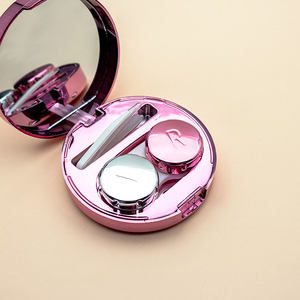
Lalens Cyber Grey Eyes For Dolls Anime Lens Wholesale Coloured Contacts
View Product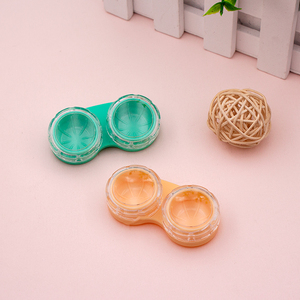
High Quality Durable Colorful Eco-Friendly Luxury Contact Lenses with Accessory Cases
View Product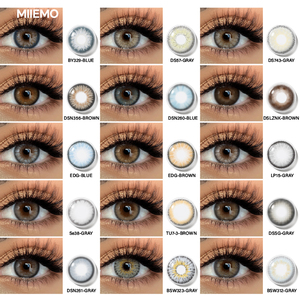
Super Natural Grey Enlarging Colored Eye Lenses Soft Comfortable Daily Use
View Product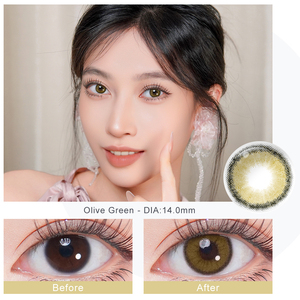
Customized Package Contact Lenses Natural Wholesale Color Contact Lenses OEM Hidrocor
View Product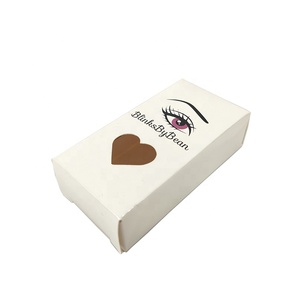
Logo All Color Contacts Wholesale Natural Color Eye Lens New Design Hot Sale Box
View Product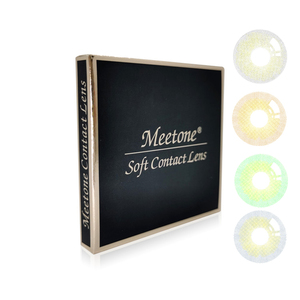
Private Label OEM Available Paper Packaging Wholesale Cosmetic Meetone Color Contact Lens
View Product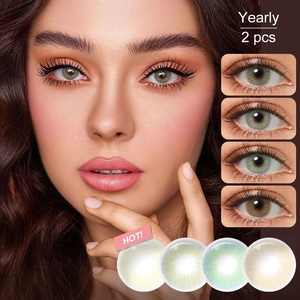
Free Sample Wholesale Freshgo Soft Colored Contact Lenses Hidrocor Prescription
View Product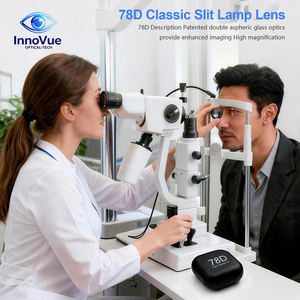
Factory Direct InnoVue 78D Contact Aspheric Ophthalmic Lens CE ISO Certified OEM
View ProductMylensora Technology: World-Class OEM/ODM Manufacturing Infrastructure
Integrating research, optical design, cast-molding automated manufacturing, and stringent regulatory compliance under a unified enterprise infrastructure.
In-House R&D & Integrated Production
Mylensora operates a direct manufacturing model. By integrating raw polymer chemical formulation, color matrix design, molding, filling, and final package sterilization, we eliminate third-party markup while ensuring strict batch-to-batch visual consistency.
3D Pigment Sandwich Technology
Our OEM hazel contact lenses utilize double-cladding pigment encapsulation. Color printing layers are locked safely between inner and outer biocompatible Hydrogel layers, preventing direct colorant contact with the corneal endothelium.
Scalable Capacity & Rapid Lead Times
With Phase I delivering over 120 million lenses annually and Phase II expansion actively underway, our facility provides global brands with high-volume scaling capability, low MOQs for product launches, and fast turnaround schedules.
Technical Evolution & Design Paradigms for Hazel Contact Lenses
Detailed technical breakdown of iris blending optics, oxygen transmissibility matrices, and high-fidelity pigmentation engineering in custom OEM contact lens manufacturing.
Multi-Tone Chromatographic Blending for Realistic Hazel Optics
Engineering realistic hazel contact lenses represents one of the most complex challenges in cosmetic ophthalmic manufacturing. Naturally occurring hazel irises consist of a sophisticated combination of lipochrome pigments, melanin distribution, and Rayleigh light scattering. To replicate this depth artificially without producing an artificial or flat "doll-eye" appearance, our custom OEM factories utilize a 3-tone and 4-tone micro-dot matrix printing setup.
By layering warm honey-amber ring tones near the inner pupil border, rich olive-green secondary matrices through the mid-body, and a soft charcoal or hazel-brown limbal ring along the outer perimeter, our lenses provide natural depth that seamlessly blends over naturally dark brown or light eye bases.
- Inner Pupil Transition Ring: Gradual 15% to 30% density gradient prevents sharp artificial pupil cutoffs.
- Mid-Tone Olive & Amber Splashes: Micro-dot frequency modulation (FM) screen printing yields natural iris radial striations.
- Feathered Outer Limbal Ring: Enhances perceived eye dimension while maintaining a soft, natural cosmetic edge.
- Substrate Color Neutralization: Formulated specifically to transform dark Asian/Latino brown eyes into bright hazel tones.
Polymer Chemistry & High-Oxygen Transmissibility Materials
Modern B2B buyers must navigate the technical trade-offs between conventional Hydrogel (HEMA-based) materials and advanced Silicone Hydrogel formulations. While conventional hydrogels offer cost-effective production, soft immediate comfort, and vibrant color adhesion, Silicone Hydrogel polymers deliver significantly elevated oxygen transmissibility (Dk/t values exceeding 80–120), making them essential for premium daily disposable and monthly wear lines.
Our manufacturing facilities utilize high-purity Polymacon, HEMA-MMA co-polymers, and fluorosilicone macromers to ensure low modulus flexibility, exceptional tear-film wetting angles, and long-lasting wearer comfort.
| Technical Parameter | Standard Hydrogel (OEM Line) | Premium Silicone Hydrogel (OEM/ODM) | Impact on Wearer & Business Margin |
|---|---|---|---|
| Water Content (%) | 38% – 42% (Low-Water Balance) | 45% – 55% (Hydra-Lock Matrix) | Minimizes dehydration rate; prevents end-of-day ocular dryness. |
| Oxygen Transmissibility (Dk/t) | 18 – 25 Dk/t | 80 – 125 Dk/t | Supports corneal health; essential for daily extended wear compliance. |
| Center Thickness (@ -3.00D) | 0.06mm – 0.08mm | 0.07mm – 0.09mm | Ultra-thin optical zone provides superior oxygen flow and light passage. |
| Base Curve (BC) & DIA | 8.5mm / 8.6mm | 14.0mm – 14.5mm | 8.6mm | 14.2mm – 14.5mm | Fits over 95% of global adult corneal curvatures. |
| Pigment Encapsulation | Dual-Surface Sandwich Print | Inter-Matrix Pigment Locking | 100% Safety Certified Zero pigment erosion. |
Strategic Procurement Trends in Custom OEM Contact Lens Sourcing
Key shift analysis for commercial optical importers, e-commerce brand managers, and regional beauty distributors planning 2025–2030 inventory strategy.
Dominance of Daily Disposables in Cosmetic Segments
Global consumer demand is rapidly shifting from annual and monthly replacement cycles toward daily disposable colored lenses. Driven by heightened ocular hygiene awareness and convenience, brand owners sourcing OEM hazel lenses must prioritize blister pack automation and high-speed daily packaging lines to maintain low unit costs.
Hyper-Realistic Blending for Dark Irises
Consumers in key beauty growth markets—including North America, the Middle East, Southeast Asia, and Latin America—are actively seeking subtle, natural hazel enhancements rather than solid opaque colors. OEM manufacturers capable of producing multi-tonal iris graphics with high-contrast inner rims hold a massive market advantage.
Prescription + Cosmetic Hybrid Integration
Cosmetic lenses are no longer restricted to plano (0.00 power) wearers. Sourcing partners require comprehensive power runs ranging from -0.50D to -10.00D, as well as toric options for astigmatism correction. Offering custom hazel tones across full power ranges dramatically increases total basket size and brand loyalty.
Regulatory Dossier Readiness & Supply Chain Audits
Tightened medical device regulation globally (such as EU MDR compliance, US FDA 510(k) clearances, and China NMPA registrations) requires contact lens factories to provide transparent batch traceabilty, sterilization validation certificates, and full technical dossiers alongside bulk product shipments.
Agile Private Label Packaging & Low MOQ Launches
Emerging e-commerce eyewear brands require flexible private labeling options. Modern OEM manufacturers must accommodate customized box graphics, unique blister foil lamination, micro-batch color trial sets, and rapid sample prototyping without demanding massive initial capital expenditure.
Sustainable Packaging Initiatives
Reduction of secondary plastic waste is becoming a core brand metric. B2B importers are sourcing factory partners that offer recyclable polypropylene blister cups, biodegradable outer carton paperboard, and eco-friendly contact lens accessory cases.
Frequently Asked Questions for B2B Importers & Brand Owners
Essential technical, regulatory, and commercial answers for buyers looking to partner with custom OEM hazel contact lens manufacturers.
Is Mylensora a direct contact lens manufacturing factory or a trading supplier?
+
What custom OEM, ODM, and Private Label branding services are supported?
+
1. OEM (Original Equipment Manufacturing): We produce contact lenses using your exact graphic patterns, base curve parameters, diameter specifications, and material choices.
2. ODM (Original Design Manufacturing): Our optical design team co-creates exclusive hazel iris graphics and unique color palettes tailored specifically to your target demographic.
3. Private Label Customization: We supply customized blister foils, premium gift boxes, multilingual instructions for use (IFU), barcoded packaging, and matching eco-friendly lens cases.
What is the minimum order quantity (MOQ) for custom hazel contact lenses?
+
Which international medical certifications cover your production facilities?
+
How do you guarantee color stability and safety for hazel pigments?
+
Can you produce prescription colored hazel lenses for myopia or astigmatism?
+
What are the lead times for sample prototyping and mass bulk manufacturing?
+
Start Your Custom OEM Hazel Contact Lens Project Today
Partner with a certified factory offering scalable production, high oxygen transmissibility, and hyper-realistic multi-tone hazel designs. Request your sample kit or custom quote now.