Executive Sourcing Whitepaper: Cosmetic & Prescription Gray Contact Lenses
The global demand for cosmetic soft contact lenses has witnessed a structural shift toward natural hue enhancement and iris morphing optics. Among all color categories, gray colored contact lenses command over 34% of the global cosmetic contact lens market share. Driven by modern beauty trends across North America, Europe, the Middle East, and Southeast Asia, gray lenses offer a versatile spectral transition capable of masking underlying dark brown and black irises seamlessly.
China has solidified its stance as the global manufacturing powerhouse for hydrogel and silicone hydrogel optical devices. Utilizing advanced cast-molding automated production lines, multi-layer pigment micro-encapsulation, and automated optical power checking, Chinese OEM/ODM factories provide international optics brands, distributors, and e-commerce leaders with unprecedented quality stability, regulatory compliance, and margin viability. This comprehensive industrial report analyzes manufacturing specifications, regulatory compliance frameworks, product innovations, and strategic sourcing methodologies for wholesale buyers worldwide.
Featured Export-Grade Gray & Cosmetic Contact Lens Products
Factory-direct OEM/ODM solutions engineered with high water content, superior oxygen transmissibility, and bio-compatible color sandwich technology.
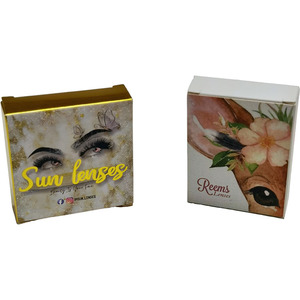
Custom Logo Colored Contact Lens Paper Box Luxury Gold Foil Cosmetic Contact Lenses Box
- Custom Printing
- Gold Foil Stamping
- Private Label
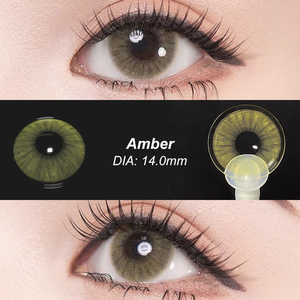
Free Shipping Hidrocor Natural Eye Contact Lenses Magister Queen Prescription Lens 14.00mm
- 14.00mm Dia
- No Limbal Ring
- Myopia Available
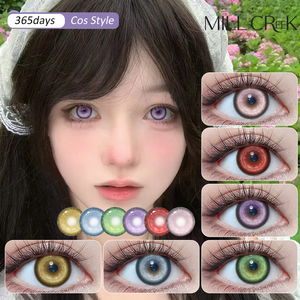
Haipurecon Halloween Cosplay 14.5mm High Quality Soft Contact Lenses Wholesale
- 14.5mm Enlarging
- Vibrant Gray Pigment
- Soft HEMA Material
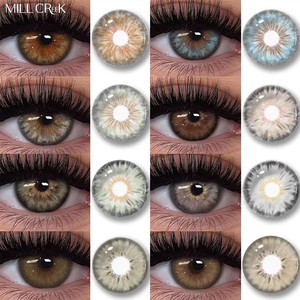
Wholesale Three Tone Colored Contact Lenses Soft Korean Style Eye Lenses Haipurecon
- 3-Tone Gradient
- Korean Style
- 38% Water Content
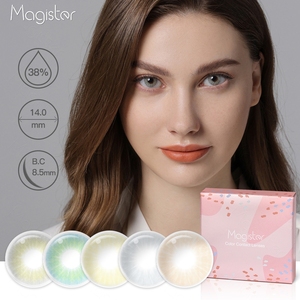
Magister Queen Most Natural Color Contact Lenses Cosmetic Colored Contacts Pupilentes
- Realistic Iris Pattern
- High Comfort
- Yearly Disposable
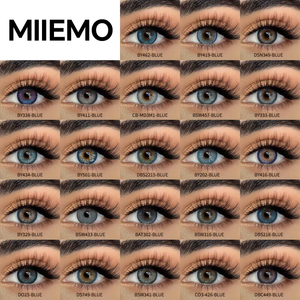
OEM Private Label Three Tone Colored Contact Lenses 38% Water Blister Pack Custom Logo
- Blister Pack
- Custom Branding
- 38% Moisture Balance
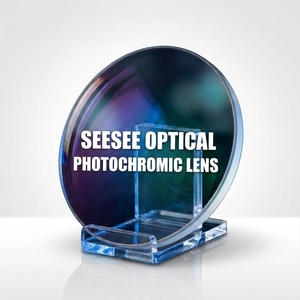
Good Price Good Quality Photochromic Lens Wholesale HC Single Vision Colorful Lentes
- Optical Grade
- Single Vision
- Photochromic Tech
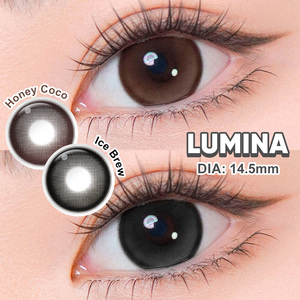
Free Shipping Full Coverage Design Colored Contact Lenses Prescription Color Power
- Opaque Gray Coverage
- Myopia 0 to -8.00D
- CE / NMPA Standard
Mylensora Technology Manufacturing Competency & Scale
As a leading Chinese manufacturer, Mylensora Technology Co., Ltd. exemplifies modern optical manufacturing infrastructure. Integrating research and development, lens design, high-precision cast molding, pigment formulation, packaging, and international trade compliance under one corporate entity, Mylensora provides wholesale partners with an unassailable competitive advantage.
With Phase I completed delivering over 120,000,000 contact lenses per annum and Phase II expansion actively scaling output, Mylensora is on track to establish one of Asia's largest automated contact lens production hubs. This massive manufacturing footprint translates to low minimum order quantities (MOQ), rapid sample turnaround, precise color repeatability batch-after-batch, and highly optimized scale pricing.
Engineering Excellence: Bio-Compatible Micro-Encapsulation & Material Physics
A primary concern for B2B optical buyers and clinical ophthalmologists is pigment safety and ocular surface bio-compatibility. Sub-standard colored contacts apply surface prints directly on the polymer, exposing corneal epithelial cells to abrasive metallic oxides and organic dyes. Top-tier Chinese contact lens factories implement Sandwich Micro-Encapsulation Technology.
1. The Micro-Encapsulated Sandwich Architecture
In this process, non-toxic organic and inorganic pigments (such as Titanium Dioxide, Iron Oxide Gray, and Phthalocyanine Cyan) are locked securely inside two transparent hydrophilic hydrogel layers. The pigment layer never contacts the cornea nor the inner palpebral conjunctiva. This ensures zero pigment leaching, ultra-smooth surface wettability, and coefficient of friction reduction down to 0.015.
2. Hydrogel (HEMA/NVP) vs. Silicone Hydrogel (SiHy) Gray Lenses
Material composition dictates wearing comfort, lens modulus, and oxygen transmissibility ($D_k/t$):
| Material Matrix | Water Content | Oxygen Transmissibility ($D_k/t$) | Modulus (MPa) | Primary Commercial Application |
|---|---|---|---|---|
| HEMA + NVP Hydrogel | 38% - 42% | 18 - 25 units | 0.30 - 0.45 | Monthly & Yearly Cosmetic Lenses, High Durability |
| High-Moisture Hydrogel | 55% - 58% | 28 - 35 units | 0.25 - 0.35 | Daily Disposable Gray Contacts, Sensitive Eyes |
| Silicone Hydrogel (SiHy) | 45% - 50% | 80 - 130 units | 0.50 - 0.70 | Premium Optical Chains, Extended Wear, Health-First Brands |
Choosing between 38% low water content (which minimizes tear film evaporation in air-conditioned environments) and Silicone Hydrogel (which maximizes oxygen transmission for all-day wear) depends entirely on your brand positioning and regional buyer preferences.
Future Sourcing & Procurement Trends in Gray Contact Lenses (2025–2030)
Strategic B2B procurement demands anticipation of market shifts. Based on global sales intelligence and optical supply chain dynamics, buyers should align their purchasing pipelines with four key upcoming trends:
Trend 1: Rapid Dominance of Daily Disposables
While monthly and annual lenses remain dominant in cost-sensitive emerging markets, developed regions (North America, Western Europe, East Asia) are transitioning rapidly toward Daily Disposable gray lenses. Consumers prioritize hygiene, zero lens case maintenance, and convenience. Chinese exporters are scaling automated blister packaging lines to reduce per-unit daily lens manufacturing costs.
Trend 2: Hyper-Natural 3-Tone & 4-Tone Radial Gray Gradients
Flat, mono-tone gray lenses are being phased out in favor of multi-tonal iris designs. Modern gray lenses combine a warm honey-gold inner pupil ring, a soft slate-gray middle iris zone, and a muted charcoal outer limbal ring. This complex matrix mimics natural human iris genetics, enabling natural blending over deep brown pupils without looking artificial.
Trend 3: Hybrid Prescription & Toric Cosmetic Offerings
Cosmetic lens buyers frequently require spherical vision correction (myopia from -0.50D to -10.00D) and cylinder power (astigmatism). Leading factories are expanding stock keeping units (SKUs) to offer immediate dispatch for prescription gray lenses, empowering private label brands to serve both cosmetic and optical vision correction markets seamlessly.
Trend 4: Regulatory Harmonization & Sustainable Packaging
International medical device regulations (such as EU MDR 2017/745, US FDA 510(k), and Brazil ANVISA) require heightened traceability. Importers must align with factories offering full technical dossiers, ISO 13485 Quality Management Systems, cleanroom manufacturing audit records, and biodegradable or recyclable gold foil cardboard primary/secondary packaging options.
Product Development & Technology Innovation Horizons
The innovation curve in cosmetic contact lens production is accelerating through advanced automation and optical physics. Chinese export factories are investing heavily in technologies that re-define comfort and visual aesthetics:
3D Digital Iris Scanning & Dot-Matrix Printing
Traditional silk-screen printing is replaced by automated high-resolution digital ink-jet systems. This technology prints microscopic color dots with tolerances under 5 microns, recreating subtle iris radial striations, crypts, and contraction furrows. The resulting gray lens offers unmatched depth and realism under direct sunlight or high-definition camera flash.
Plasma Surface Coating & Moisture Locking
Silicone hydrogel monomers are inherently hydrophobic. To overcome surface dry-eye discomfort, top factories apply continuous plasma surface treatment or integrate internal wetting agents (such as Hyaluronic Acid or Polyvinylpyrrolidone / PVP) into the polymer matrix. This creates a permanent hydration layer that resists protein deposition and lipid buildup throughout the day.
Photochromic Smart Gray Lenses
Emerging at the intersection of optical correction and sun protection, photochromic contact lenses dynamic dark gray in response to UV rays outdoors, shifting back to clear or subtle cosmetic gray indoors. Sourcing photochromic single-vision optical devices positions brands at the absolute forefront of functional optics technology.
Supplier Evaluation Matrix: Choosing the Right Chinese Exporter
Evaluating potential contact lens manufacturing partners requires a structured audit across key technical, operational, and regulatory parameters:
| Evaluation Domain | Critical Sourcing Requirement | Mylensora Factory Standard | Industry Benchmark |
|---|---|---|---|
| Cleanroom Rating | Class 100,000 (ISO Class 8) Sterility | Fully Automated Class 100,000 Cleanrooms | Standard Assembly Cleanrooms |
| Quality Certification | NMPA / CFDA Class III, ISO 13485 | Fully Certified Dossiers Available | Basic ISO 9001 / Unregistered |
| Power Range Precision | Diopter tolerance within ±0.25D | 100% Laser FOCO Inspection Tested | Batch Sample Testing |
| Customization / OEM | Private Label Blister, Box, & Pattern | Full OEM/ODM In-House Design & Packaging | Third-Party Packaging Outsourcing |
| MOQ Flexibility | Low MOQ for Startup Brand Testing | Flexible Batch Stock & Low Custom MOQ | High Factory Minimal Thresholds |
Frequently Asked Questions (B2B Procurement & Import Guide)
Why are Chinese factories preferred for wholesale gray colored contact lenses?
What is the minimum order quantity (MOQ) for custom private label gray lenses?
How do gray colored contacts cover dark brown or black eyes effectively?
Which international quality standards and regulatory certificates are required?
What is the difference between 38% water content and 55% water content in gray contact lenses?
Can we request physical samples before issuing a bulk production PO?
Start Your Private Label Gray Contact Lens Line Today
Partner with China's leading certified contact lens manufacturer. Access factory-direct wholesale pricing, custom package design, and rapid global export dispatch.
Get Catalog