High Water Content & Specialized Contact Lens Series
Explore our factory-direct wholesale collections engineered with advanced micro-encapsulation, high oxygen permeability, and biomimetic hydration technology.
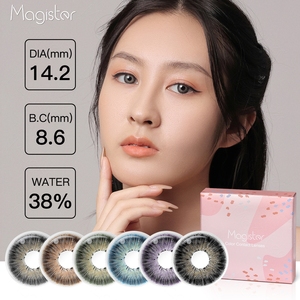
Magister March Sales 6-Monthly Color Contact Lenses for Dark Eyes
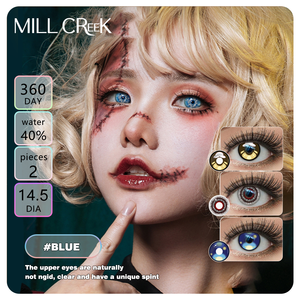
Haipurecon Halloween Cosplay Soft Lenses Three-Tone Big Eyes 14.5mm HEMA 40% Water
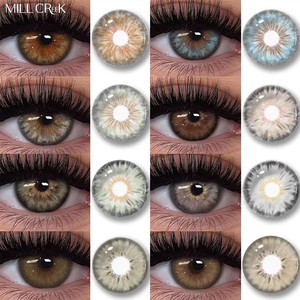
Wholesale Three Tone Soft Korean Style Eye Colored Contact Lenses Beauty Series
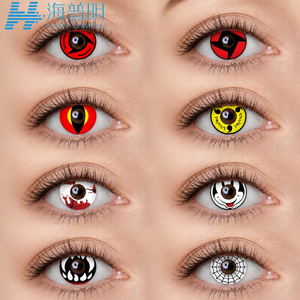
Hazel Yearly 14.5mm Special-Effect Cosplay Crazy HEMA OEM Wholesale Colored Contacts
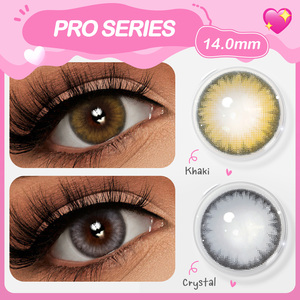
Freshgo PRO Yearly Soft Colored Eye Contact Lenses 40% Water Content 14.0mm
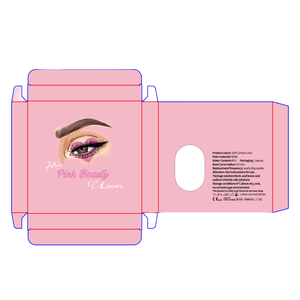
Custom Recyclable Sponge Lined Self-Erecting Contact Lens & Lash Packaging Box
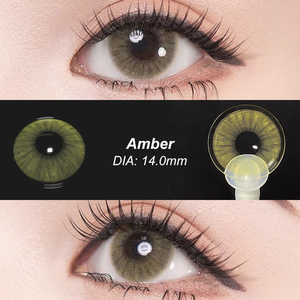
Magister Hidrocor Natural Prescription Colored Contacts 14.00mm Cosmetic Vision Lenses
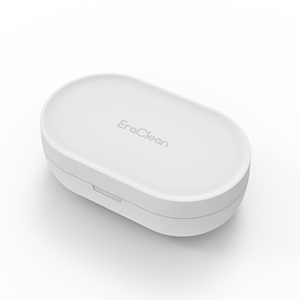
EraClean Portable Ultrasonic Contact Lens Cleaner Case with Magnetic Charging & Mirror
State-of-the-Art Contact Lens Manufacturing Infrastructure
Mylensora Technology Co., Ltd stands at the forefront of global ophthalmic device manufacturing, operating a fully integrated enterprise model that spans specialized material science research, automated cast-molding synthesis, optical precision tinting, and regulatory compliance distribution. As a certified manufacturer governed by strict Class III medical device standards, our facilities are architected to deliver superior biocompatibility and mechanical durability across hydrogel and silicone hydrogel matrix formations.
Phase I of our manufacturing complex encompasses an annual output capacity exceeding 120 million lenses, powered by fully automated high-precision injection and cast-molding production lines. To satisfy surging international demand across North America, Europe, the Middle East, and Asia-Pacific, Phase II expansion is actively scaling our total production footprint to establish one of the largest specialized cosmetic and prescription contact lens manufacturing hubs in Asia. Brand owners, distributors, and hospital-grade optical importers gain direct access to factory-level engineering without intermediary margins.
Our commitment to technical excellence is showcased annually at international optics conventions including MIDO Eyewear Show (Milan), HKTDC Hong Kong International Optical Fair, and Dubai Vision Plus Expo. Through continuous technological iterations in polymer matrix hydration and color encapsulation, Mylensora remains the trusted manufacturing partner for top-tier optical retail chains and private label beauty conglomerates.
The Science of High Water Content Contact Lenses
Understanding hydrogel hydration dynamics, oxygen transmissibility ($Dk/t$), and mechanical modulus optimization for superior clinical outcomes.
1. Hydrogel Material Matrix & Hydration Mechanics
High water content contact lenses (typically defined as hydrogel polymers containing greater than 50% to 58%+ water by weight) rely on hydrophilic monomer networks such as Poly-2-hydroxyethyl methacrylate (pHEMA), N-Vinylpyrrolidone (NVP), and Methacrylic Acid (MAA). Hydrophilic monomers possess polar functional groups that form hydrogen bonds with water molecules, locking moisture inside the polymer matrix. This structural water acts as a fluid medium through which dissolved oxygen permeates directly to the corneal epithelium.
The relationship between water content and oxygen permeability in conventional hydrogels follows an exponential curve: as the water ratio increases, the baseline oxygen transmissibility ($Dk$) increases proportionally. This ensures that the cornea receives adequate oxygen during extended wear, drastically minimizing risk factors associated with corneal hypoxia, epithelial edema, and limbal hyperemia.
Technical Information Gain: While traditional hydrogels rely purely on water content for oxygen transport ($Dk \approx 8.3 \times 10^{-11} \cdot e^{0.0441 \times \%H_2O}$), next-generation high-water silicone hydrogels decouple oxygen transport from water content by utilizing siloxane polymer chains. Sourcing managers must evaluate both total water content and material $Dk/t$ based on target end-user wearing modalities (daily disposable vs. monthly replacement schedules).
2. Engineering the Hydration vs. Dehydration Balance
A persistent technical challenge in high water content hydrogels is environmental and tear-film dehydration. Lenses with elevated water ratios can suffer from evaporative loss under low-humidity conditions or air-conditioned office environments, drawing moisture from the pre-lens tear film and inducing transient dry-eye symptoms. To counter this, Mylensora's chemical engineering team incorporates bio-inspired wetting agents—such as Hyaluronic Acid (HA) complexes and Polyvinyl Alcohol (PVA) matrices—directly into the formulation.
| Parameter Category | Standard Hydrogel (38% - 42%) | High Water Hydrogel (55% - 58%) | Silicone Hydrogel (45% - 55% + Si) |
|---|---|---|---|
| Primary Monomers | pHEMA / EGDMA | pHEMA / NVP / MAA | Fluoro-siloxane Macromers / HEMA |
| Oxygen Transmissibility ($Dk/t$) | 12 - 18 barrier units | 25 - 35 barrier units | 80 - 150+ barrier units |
| Modulus of Elasticity (Rigidity) | 0.5 - 0.7 MPa (Firm) | 0.25 - 0.35 MPa (Ultra-Soft) | 0.6 - 1.2 MPa (Resilient) |
| Initial Insertion Comfort | Moderate | Exceptional / Immediate | High (Subject to Surface Coating) |
| Target Clinical Wearer | Cost-conscious / Long durability | Sensitive eyes / Daily disposable focus | Extended wear / High oxygen requirement |
3. Micro-Encapsulation "Sandwich" Color Technology
For cosmetic high water content contact lenses, pigment safety is paramount. Raw micro-pigments exposed to the ocular surface can cause mechanical friction, allergic conjunctivitis, or toxic dye leaching. Mylensora utilizes proprietary 3D Sandwich Color Encapsulation. Organic colorants are fully isolated between an inner and outer layer of clear hydrogel material. The smooth, non-ionic polymer surface ensures that color pigments never come into contact with corneal tissues or delicate conjunctival membranes, securing full CE and CE 2797 / MDR safety clearance.
Future Sourcing & Product Development Trends
Key market shifts driving global supply chain adjustments, material selections, and regulatory compliance strategies for optical brand owners.
1. Rapid Acceleration of Daily Disposables
Global consumer preference is shifting rapidly from annual and monthly replacement cycles toward daily disposable contact lenses. Driven by heightened hygiene awareness and convenience, daily disposables eliminate cleaning compliance issues. High water content, low-modulus daily hydrogels represent the fastest-growing revenue category in retail optical channels.
2. Eco-Friendly Packaging Innovation
Secondary and primary packaging sustainability has evolved from a marketing differentiator into a core procurement requirement. Major European and North American buyers are mandating recyclable blister films, reduced plastic volume per card, and self-erecting FSC-certified outer boxes. Integrated suppliers who offer fully recyclable packaging options significantly streamline client ESG metrics.
3. Stringent Global Regulatory Alignment
The transition from EU MDD to MDR (Regulation EU 2017/745) alongside stricter FDA 510(k) oversight has heightened barriers to entry. B2B importers are increasingly migrating orders away from small-scale traders toward direct manufacturing facilities holding comprehensive technical documentation (TCF), ISO 13485 audit histories, and valid NMPA/CE certification suites.
4. Photoprotective & Functional Lenses
Modern consumers demand dual-action functionality. Sourcing trends highlight a growing demand for contact lenses infused with UV-blocking agents (Class 1 and Class 2 UV filtering) and High-Energy Visible (HEVL) blue-light absorbing monomers. Combining cosmetic hue enhancements with functional ocular protection offers private label brands high retail margin expansion.
5. Hyper-Targeted Private Label Aesthetics
Standard monolithic color catalogs are being replaced by custom visual signatures designed specifically for localized demographic characteristics—such as specialized iris patterns tailored to deep brown eyes, high-contrast cosplay aesthetics, or ultra-natural limbal rings for daily cosmetic wear.
Why Direct OEM/ODM Collaboration Accelerates Brand Growth
Bypassing trading intermediaries directly impacts bottom-line unit economics, technical adaptability, and regulatory safety. As a direct-to-market manufacturer, Mylensora provides strategic capabilities engineered specifically for scalable B2B operations:
Full OEM/ODM Versatility
We provide full-spectrum custom manufacturing. Whether utilizing existing clinical formulations (OEM) or co-developing proprietary iris patterns, custom base curves, and brand-specific water ratios (ODM), our optical laboratory translates concepts into commercial-grade products.
Rigorous Batch Quality Assurance
Every production run undergoes 100% automated optical inspection (AOI) for edge defect detection, power accuracy validation via digital focimeters, and strict bio-burden sterility testing in Class 100,000 (ISO Class 8) cleanrooms before release.
Low MOQ & Agile Inventory Logistics
To support emerging digital-native brands and regional retail distributors, we offer flexible MOQ structures for in-stock color catalogs alongside scalable mass-production pricing tiers for high-volume custom orders.
Frequently Asked Questions for Sourcing Managers
Addressing essential technical, regulatory, and logistics queries for international contact lens procurement.
Partner with a World-Class Contact Lens Manufacturer
Elevate your brand with CE-certified high water content hydrogel and silicone hydrogel solutions. Contact our OEM/ODM engineering specialists today to request technical samples, factory audit reports, and custom price schedules.