Featured Contact Lens OEM / ODM Collections
Explore our export-grade medical and cosmetic contact lenses manufactured under strict CE & ISO 13485 standards.
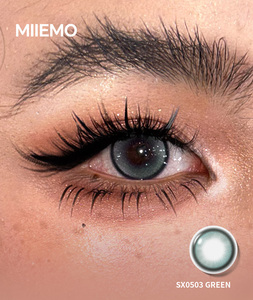
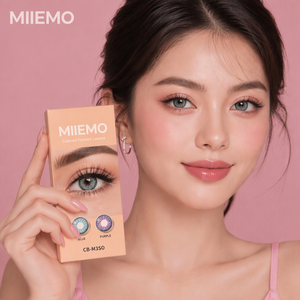
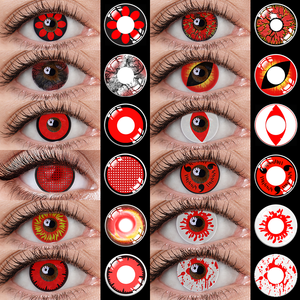
1. Executive Overview: Sourcing CE Certified Black Contact Lenses
In the global ophthalmic and cosmetic eyewear sector, CE certified black contact lenses represent one of the fastest-growing niche categories. B2B buyers—ranging from regional optical distributors and specialized e-commerce brands to theatrical costume suppliers—demand contact lenses that reconcile high-impact visual aesthetics with rigorous ocular safety parameters. The production of deep black pigments, full blackout lenses, and defined limbal ring enhancers requires specialized polymer chemistry to prevent pigment leaching, hypoxia, or mechanical surface friction.
As a leading Chinese direct-manufacturer operating under Mylensora Technology Co., Ltd, our enterprise integrates research, optical design, automated cast-molding, and full private label OEM/ODM packing under strict quality management systems. This whitepaper provides commercial buyers with an exhaustive technical framework for evaluating black contact lens factories, understanding international regulatory compliance (CE MDR / ISO 13485), analyzing market procurement trends, and leveraging OEM manufacturing capabilities.
Technical Baseline: Sandwich Pigment Encapsulation Technology
Unlike lower-tier cosmetic lenses where colorants are surface-printed onto hydrogel matrixes, export-grade black contact lenses utilize double-layer sandwich encapsulation. Micro-encapsulated organic black carbon pigments are isolated between two micro-thin layers of hydrogel or silicone hydrogel material. This prevents direct pigment contact with the corneal endothelium, eliminating cytotoxic leachability and maintaining a continuous 0.08mm edge-profile smooth modulus.
2. Product Engineering & Technical Specifications Matrix
When selecting black contact lenses for wholesale distribution or private label branding, procurement managers must evaluate several physiological and optical variables. Black lenses typically exhibit higher light absorption due to full-opacity pigments, making base-curve consistency, oxygen permeability (Dk/t), and water content balance vital for user wearability.
| Specification Category | Natural Black Limbal Enhancers | Full Black Out / Cosplay Lenses | Silicone Hydrogel Black Series |
|---|---|---|---|
| Target Water Content | 38% - 42% HEMA Polymer | 38% Low Water (Dimensional Stability) | 45% - 55% High Breathability |
| Base Curve (BC) | 8.5mm - 8.6mm | 8.6mm Standard | 8.6mm - 8.7mm Custom |
| Diameter (DIA) | 14.0mm - 14.2mm (Subtle) | 14.5mm - 17.0mm (Enlarging/Sclera) | 14.2mm Precision Fit |
| Oxygen Permeability (Dk/t) | 18 - 25 Dk/t | 15 - 22 Dk/t | 80 - 120 Dk/t (Extended Wear) |
| Pigment Printing Method | Micro-Dot Matrix Limbal Ring | Full High-Density Opaque Sandwich | 3D Encapsulated Bio-Lock Tinting |
| Power Range (Diopters) | 0.00 to -10.00D (Myopia) | 0.00D Planar / Selected Powers | 0.00 to -12.00D Myopia & Astigmatism |
| Regulatory Standards | CE MDR, ISO 13485, NMPA | CE MDR, ISO 13485, NMPA | CE MDR, ISO 13485, NMPA, US FDA Prep |
3. Enterprise Competitive Advantages: Mylensora Manufacturing Blueprint
Building a successful global optical brand requires a manufacturing partner with verified infrastructure, financial stability, and continuous technological expansion. Mylensora Technology Co., Ltd stands as a premier direct factory designed specifically to solve B2B sourcing bottlenecks.
Integrated Factory Engine
Design, R&D, chemical polymer formulation, cast molding, automated blister packaging, and quality testing are executed entirely in-house without third-party middlemen.
Scale Capacity: 120M Units
Phase I manufacturing achieves 120 million lenses annually across 8 automated lines. Phase II expansion is actively building one of Asia’s largest contact lens industrial complexes.
CE & NMPA Compliance
Fully accredited with CFDA (now NMPA) and medical-grade CE marks. Products conform to ISO 13485 quality systems and EN ISO 10993 cytotoxicity testing.
Private Label Customization
Complete OEM & ODM support for box design, blister foil artwork, multi-language instruction leaflets, and custom base curves to establish your brand identity.
Low MOQ & Rapid Dispatch
We maintain deep safety stock for top-selling black out and natural limbal ring SKUs, enabling trial orders and agile supply chain restocking for distributors.
Global Trade Footprint
Regular exhibitor at major optical trade expos worldwide including MIDO Milan, HKTDC Hong Kong, and Dubai Vision Plus Expo.
4. Strategic Product Recommendations & Market Segmentation
B2B importers should curate their black contact lens product portfolio based on consumer demographics and wear contexts. Our factory analytics indicate three distinct consumer segments driving global purchase volume:
A. Natural Eye Enlargement & Limbal Ring Definition (Daily & Monthly Wear)
In East Asian, Southeast Asian, and Latin American markets, daily-wear black contact lenses featuring subtle 14.2mm - 14.5mm outer ring graphics remain top revenue generators. Consumers seek a doll-eye enlargement effect without looking overly unnatural. These lenses combine 38% water content HEMA hydrogel with fine dot-matrix shading to blend seamlessly with dark brown irises.
B. Full Blackout & Scleral Cosplay Lenses (Seasonal & Alternative Fashion)
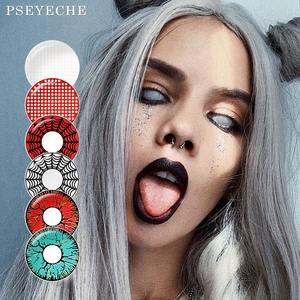
In North America, Europe, and the Middle East, the Halloween, cosplay, and gothic subculture markets generate substantial seasonal surges for 100% full-opacity black lenses. Lenses like our Pseyeche Black Out series use high-density organic pigment layers that obscure the natural iris entirely, providing a dramatic theatrical effect while maintaining 0.00D to prescription power compatibility.
C. High-Dk Silicone Hydrogel Black Lenses (Premium Optical Outlets)
For optical chains and clinical prescribing environments, silicone hydrogel black lenses offer the ultimate comfort baseline. Integrating fluoro-silicone monomers increases oxygen transmissibility up to 5x compared to conventional hydrogel, preventing corneal hypoxia during extended 12+ hour wearing shifts.
5. Product Procurement & Manufacturing Trends (2025–2030)
The global contact lens market is transitioning rapidly due to consumer health awareness, regulatory tightening, and e-commerce packaging demands. Exporters and brand owners must align their long-term sourcing strategies with the following industry shifts:
1. Shift From Annual Hydration Cycles to Daily Disposables
While yearly and half-yearly lenses historically dominated cosmetic sales in emerging markets, consumer preference is shifting rapidly toward Daily Disposable (1-Day) single-use packaging. Daily disposables minimize ocular infection risks, eliminate cleaning solution overheads, and provide higher lifetime customer value (LTV) through recurring monthly subscriptions.
2. Sustainable & Automated Eco-Blister Packaging
Global regulatory bodies and consumer groups are pressuring brand owners to reduce single-use plastic footprint. Future manufacturing trends favor lighter polypropylene blister trays, recyclable aluminum foil covers, and streamlined secondary paper boxes designed for optimized cross-border parcel delivery.
3. Strict Regulatory Enforcement (EU MDR Compliance)
The transition from EU MDD to MDR (Medical Device Regulation 2017/745) requires comprehensive clinical evaluation reports (CER), post-market surveillance (PMS), and Unique Device Identification (UDI) tracking on all blister units. Sourcing exclusively from audited, CE-compliant factories like Mylensora safeguards distributors against customs seizures and legal liabilities.
6. Comprehensive B2B Sourcing FAQ
Below are detailed responses to the most critical technical and commercial questions posed by global procurement officers during factory audit and contract negotiation stages:
Is Mylensora a direct factory or a trading company?
How do you ensure the safety of black pigments in contact lenses?
What international certifications do your factory and black contact lenses hold?
What is your minimum order quantity (MOQ) for private label OEM projects?
Can you manufacture black contact lenses with vision correction (myopia powers)?
What is the standard production and shipping lead time for export orders?
How does Mylensora support distributors with customs clearance and documentation?
Partner with Asia's Premier Contact Lens Manufacturer
Request factory pricing, sample kits, or private label OEM consultation today. Our expert international trade team responds within 12 hours.
Send an Inquiry