0%

Colored contacts can change the look of your eyes in seconds. Choosing the best pair takes more than matching a shade to your outfit. Comfort, clear vision, and safe professional fitting matter just as much.

The CDC estimates that contact lens wearers make nearly one million outpatient and emergency visits annually in the United States for eye infections and other complications. Its report does not distinguish colored lenses from clear lenses, but the reminder is relevant: every contact lens needs careful handling. The FDA also classifies decorative lenses as medical devices, not ordinary cosmetics. A dramatic color is not worth an avoidable eye problem.

In its guidance on decorative lenses, the FDA quotes ophthalmologist Dr. Thomas Steinemann: “Contact lenses are not cosmetics or over-the-counter merchandise.” That warning gives this guide its starting point. We’ll compare colored contacts by appearance, comfort features, available prescriptions, and practical care considerations—not by color alone. Results can vary. A shade that looks vivid on one person may appear muted on another, especially over dark eyes. Some details are easy to overlook, too, including how the lens pattern looks in daylight or whether the edges feel noticeable after several hours. This guide aims to help you ask better questions before choosing, while recognizing that online descriptions cannot replace an eye-care professional’s fitting advice.
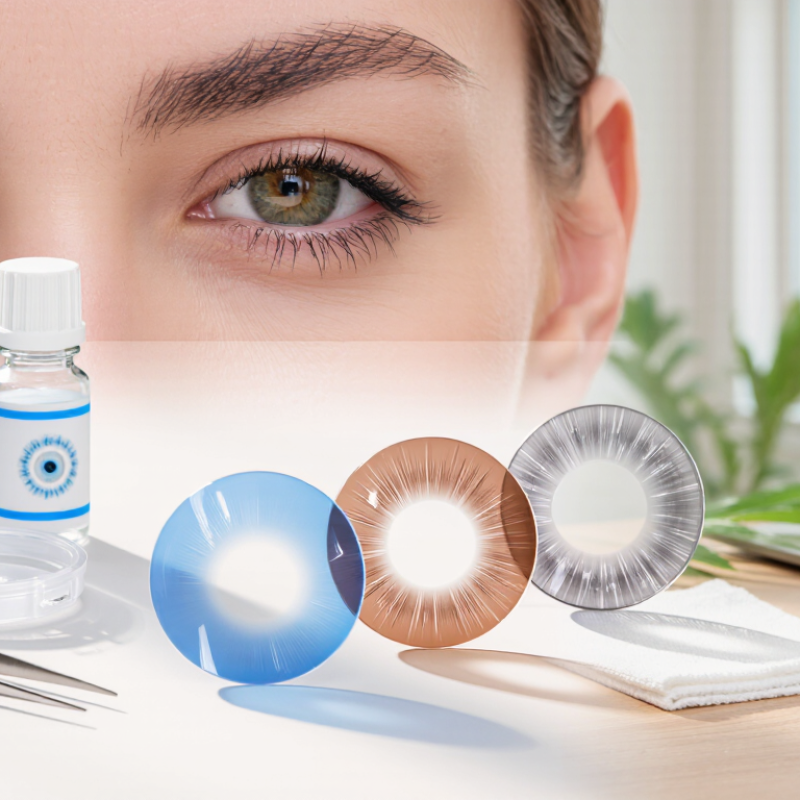
What Are the Best Colored Contacts in 2026?

Define Colored Contacts Under the FDA’s Prescription-Only Rules

In 2026, the best colored contacts are not simply the pair with the most vivid shade. They should be prescribed for your eyes and fitted by an eye-care professional. In the United States, the FDA regulates all contact lenses as medical devices, including lenses worn only for cosmetic effect. A prescription is required. Eye color does not determine fit; measurements and an eye examination do.

The CDC reported an estimated 40.9 million adult contact lens wearers in the United States, based on 2014 data (Cope et al., MMWR, 2015). That figure describes contact lens use overall, not colored-lens use. Still, it shows how many people rely on lenses that sit directly on the eye. A poorly fitting lens can cause irritation, blurred vision, or injury. A dramatic color may look appealing in a display, but comfort and clear vision matter more.

Tips: Get a current prescription, even for occasional wear. Follow the care instructions, and never share lenses. Ask your eye-care professional about color options that suit your prescription and eye measurements. If your eyes become painful or unusually red, remove the lenses and seek professional advice. A small detail matters: decorative does not mean risk-free.

Place the Category in Context: CDC Estimates 45 Million U.S. Contact Lens Wearers

What Are the Best Colored Contacts in 2026?

The conversation about colored contacts belongs within a much larger category. The CDC estimates that about 45 million people in the United States wear contact lenses. That number includes daily vision correction, cosmetic changes, and people who switch between glasses and lenses. Colored contacts are not simply beauty accessories. They sit directly on the eye and require the same careful fitting as clear lenses.

The best colored contacts in 2026 should offer a proper prescription, breathable materials, stable movement, and comfortable moisture balance. A licensed eye-care professional can measure the eye’s shape and check for dryness or irritation. This matters because a lens that looks natural in a photo may feel rough after six hours. Look closely at the printed color pattern, too. Uneven edges can appear artificial in bright sunlight. Some lenses also shift slightly during blinking, creating a noticeable blur.

Safety still outranks novelty. Buy only from authorized sources that request a valid prescription and provide clear replacement guidance. Never share lenses, sleep in them without professional approval, or rinse them with tap water. Small shortcuts can create serious problems. It is tempting to rank colors from best to worst, but that judgment remains incomplete. Comfort depends on the wearer, the eye, the climate, and even screen time. A soft hazel shade may suit one person beautifully, while another wearer may prefer a cooler gray with less visual contrast.

Compare Lens Materials, Color Effects, Oxygen Permeability, and Replacement Schedules

Colored contacts differ in both material and appearance. A translucent tint can enhance natural iris patterns, while an opaque design creates a stronger color shift. Check the lens material and oxygen transmissibility, not shade alone. Holden and Mertz’s 1984 study in Investigative Ophthalmology & Visual Science reported historical Dk/t thresholds of 24.1 for daily wear and 87 for extended wear to limit corneal swelling. These figures are not a personal safety guarantee. Lens thickness and pigment placement also affect oxygen delivery. Color is personal.

Replacement timing matters just as much. Daily disposables are discarded after one use; reusable lenses follow their prescribed daily, biweekly, or monthly schedule. Do not extend that interval because lenses look clean. The CDC’s 2018 MMWR report found that about 81% of adult contact-lens wearers reported at least one risky behavior, including care practices that can raise infection risk. Ask an eye-care professional to confirm fit, material, and replacement timing before choosing colored lenses. A mirror cannot reveal poor oxygen flow. Small details count. A lens that feels comfortable at noon may still leave eyes dry by evening, so comfort alone is not proof of a good fit.

What Are the Best Colored Contacts in 2026? — Compare Lens Materials, Color Effects, Oxygen Permeability, and Replacement Schedules
Lens option Typical material Color effect Approximate material oxygen permeability (Dk) Replacement schedule Useful comparison notes
Daily disposable colored lenses Usually conventional hydrogel May offer subtle enhancement tints or more opaque designs, depending on the lens. Conventional hydrogel materials vary widely; approximately 8–40 barrer is a broad indicative range. Wear once, then discard. Never reuse a daily disposable lens. Fresh lens each day avoids cleaning and storage. Check the package for wear limits; daily replacement does not mean safe for overnight wear.
Reusable colored lenses Most commonly conventional hydrogel; the exact polymer varies by product. Available in enhancement tints and opaque color patterns. The visible result depends on natural eye color, lighting, and lens design. Conventional hydrogel materials vary; approximately 8–40 barrer is a broad indicative range. May be labeled for two-week or monthly replacement. Follow the exact product label and care instructions. Requires compatible disinfecting solution and a clean storage case. Replace on schedule even if the lenses still look clear.
Colored silicone hydrogel lenses Silicone hydrogel, where a colored design is available Color options and opacity depend on the specific design; availability may be more limited than for hydrogel lenses. Silicone hydrogel materials commonly have higher Dk, often approximately 60–150+ barrer, but values vary by material. Use only the replacement interval stated for that lens; some are daily, while others are reusable. Higher material Dk does not by itself establish that a lens is suitable for overnight wear. Follow the prescribed wearing schedule.
Enhancement tint Usually a tinted hydrogel lens; material and schedule vary. A translucent tint generally enhances or changes lighter eyes subtly rather than fully covering the natural iris color. Depends on the lens material. Check the product’s stated Dk and, where provided, Dk/t. May be daily disposable or reusable; use the schedule printed on the product packaging. The result is less predictable on dark eyes because a translucent tint does not fully mask the underlying iris.
Opaque color tint Often hydrogel; material, pigment layout, and lens thickness vary by design. An opaque or printed pattern is designed to make a more noticeable change and may cover more of the natural iris color. Cannot be reliably inferred from color or material category alone. Refer to the specific lens’s Dk/t or other manufacturer specifications. Daily or reusable schedules are product-specific; discard or replace exactly as directed. Printed color zones should not obstruct vision. A poor fit or a lens that moves can affect vision, so professional fitting is important.

How to compare: Dk describes oxygen permeability of the lens material; Dk/t also accounts for lens thickness and is more useful for comparing oxygen transmissibility in a finished lens. The Dk ranges above are broad material-level estimates, not specifications for a particular lens. Colored contacts require an appropriate fit and prescription where required by local regulations. Follow an eye-care professional’s advice and the exact package instructions, and do not sleep, swim, or shower in lenses unless specifically directed for that product.

Apply the CDC Finding That 99% of Wearers Reported a Lens-Care Risk

What makes a colored contact lens “best” in 2026 is not the brightest shade or the most dramatic before-and-after photo. It is a lens that fits your eyes, suits your vision needs, and comes with clear wear and care instructions. An eye-care professional can check the fit, even if you only want cosmetic color. A lens that feels comfortable in the shop may still rub or blur later. That detail is easy to miss.

A CDC-cited survey found that 99% of contact lens wearers reported at least one risky care habit. The figure comes from a survey, not a claim that 99% developed an infection. Still, it is a sharp reminder: attractive lenses do not cancel basic hygiene. Risky habits can include sleeping in lenses, topping off old solution, or exposing lenses to water. A clear-looking lens case is not proof that everything is clean. Small habits count.

Before choosing a color, ask how often the lenses must be replaced and whether your prescription and fit have been checked. Wash and dry your hands before handling them, use fresh solution as directed, and keep lenses away from tap water. Never stretch the replacement schedule to make a pair last longer. It can seem harmless. If your eyes become painful, red, light-sensitive, or suddenly blurry, remove the lenses and seek prompt advice from an eye-care professional. A favorite shade is not worth ignoring those signs.

Rank 2026 Options by Verified Fit, Safety, Comfort, and Total Cost

A credible 2026 ranking should reward verified fit and safety before color range or price. Fit should be confirmed by an eye-care professional, including measurements for the lens and the wearer’s eyes. A printed prescription is not a guess. Check that the product’s labeling, seller, and safety documentation meet the requirements where you live. Reject listings with vague materials, missing instructions, or no clear replacement schedule.

Comfort is personal, but useful evidence includes trial feedback, breathable materials, and guidance for dry or sensitive eyes. Stop wearing lenses if you notice pain, redness, blurred vision, or unusual light sensitivity, and seek professional advice.

No shortcuts.

Compare total yearly cost, not just the box price: include an exam or fitting, replacement lenses, cleaning solution, and any needed follow-up visits. A low upfront price can become expensive fast. Rank options by documented fit and safety first, then comfort, then full cost. Be cautious with star ratings; they rarely prove a lens fits your eyes. And a ranking can still miss individual differences. That part deserves a little humility.

FAQS

Do colored contacts require a prescription in the United States?

Yes. Even lenses worn only for appearance require a prescription and a professional fitting.

How does an eye-care professional choose the right fit?

They examine your eyes and take measurements. Eye color alone does not determine lens fit.

What should I look for in colored contacts?

Look for a proper prescription, breathable material, stable movement, and comfortable moisture. Fit matters more.

Can colored lenses feel uncomfortable after several hours?

Yes. A lens that looks natural in a photo may feel rough after six hours.

What can make a colored lens look unnatural?

Uneven printed edges may stand out in bright sunlight. Some lenses shift when you blink and briefly blur vision.

How should I care for my lenses?

Follow the care and replacement instructions. Never share lenses. Do not rinse them with tap water.

Is it safe to sleep in colored contacts?

Only do so if your eye-care professional specifically approves it. Otherwise, remove them before sleeping.

What should I do if my eyes become painful or unusually red?

Remove the lenses and seek professional advice. Do not ignore persistent irritation.

How many people wear contact lenses in the United States?

Estimates describe about 45 million wearers overall, not just colored-lens users. The exact figure is imperfect, and the distinction matters.

Conclusion

Colored contacts are cosmetic or vision-correcting contact lenses that change or enhance eye color, but they are still medical devices and require a valid prescription and professional fitting under U.S. rules. With the CDC estimating that about 45 million people in the United States wear contact lenses, safe use matters across the entire category. This guide compares lens materials, oxygen permeability, color effects, and replacement schedules, explaining how each can influence appearance, comfort, and eye health.

The best options for 2026 should be judged by more than color or price. A suitable lens needs a verified fit, appropriate prescription, reliable oxygen flow, and a replacement schedule the wearer can follow. The CDC has reported that 99% of contact lens wearers described at least one risky lens-care practice, underscoring the importance of hand hygiene, proper cleaning, and avoiding unsafe wear habits. Comparing comfort, safety, care requirements, and total cost can help readers choose colored contacts that fit both their eyes and their routine.

Elara

Elara

Elara is a marketing professional with a deep understanding of the company’s products and the practical needs they are designed to address. Through careful research and close collaboration with colleagues across the business, she turns product knowledge into clear, useful guidance for customers.......